Terms & Conditions
- All items sold by RP Coins are supplied on approval and may be returned for any reason within seven days of receipt. Customers returning goods are responsible for arranging insurance against loss or damage. Third party sales items are sold on approval where indicated. Please see the introduction to that section for further details.
- Clients of known good standing to us will have their goods shipped upon receipt of order or as soon as is practicable afterwards, payment being due upon their receipt of invoice. All other clients’ orders will be held pending payment and shipped on receipt of cleared funds. All goods remain the property of RP Coins until paid for in full.
- Payment should be made in GBP by the following means - cheque drawn on a UK bank made payable to RP Coins. Please do NOT make them payable to R Pearce. Payment may also be made by postal order, banker’s draft or transfer to our bank account at Bank of Scotland, sort code 80-22-60, account no. 29068662. Cheques or money orders drawn on foreign bank accounts in local currency are expensive to process and may take up to a month to clear. If this is the only option available to you, please add £15 to the invoice total to cover the additional charges. Payment can be made using debit or credit cards as indicated.
- Postage will be charged on all orders.
- For UK coin orders up to £50 value the cost is £5.00. Orders over this up to £750 will be despatched by Royal Mail Special Delivery (insured) at a cost of £12 per order. Over £750 is £20 per order. Books and other heavy items will be charged according to the prevailing postage cost for that weight.
- Export sales are supplied net of any UK VAT (where applicable). Import duties or taxes payable in the destination country are the responsibility of the customer.
- All items sold are guaranteed genuine unless indicated otherwise.
Hanover (1714-1901)

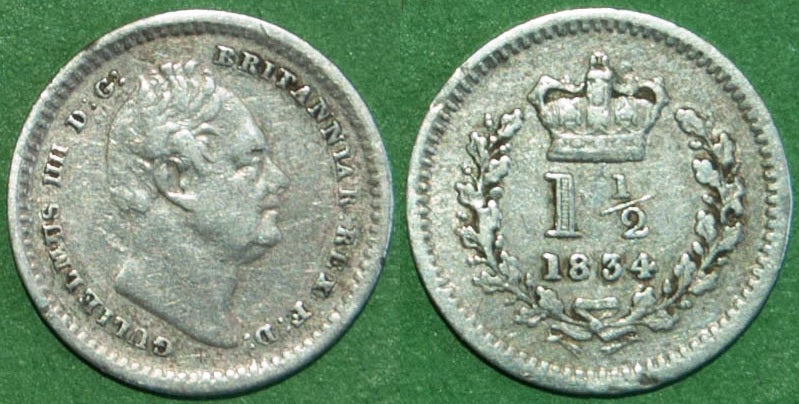
1834 Threehalfpence
£30.00
S3839, Davies 410, ESC 2539 (2250). William IV 1834 threehalfpence. Issued for colonial use. Even wear to both sides Grade: VF

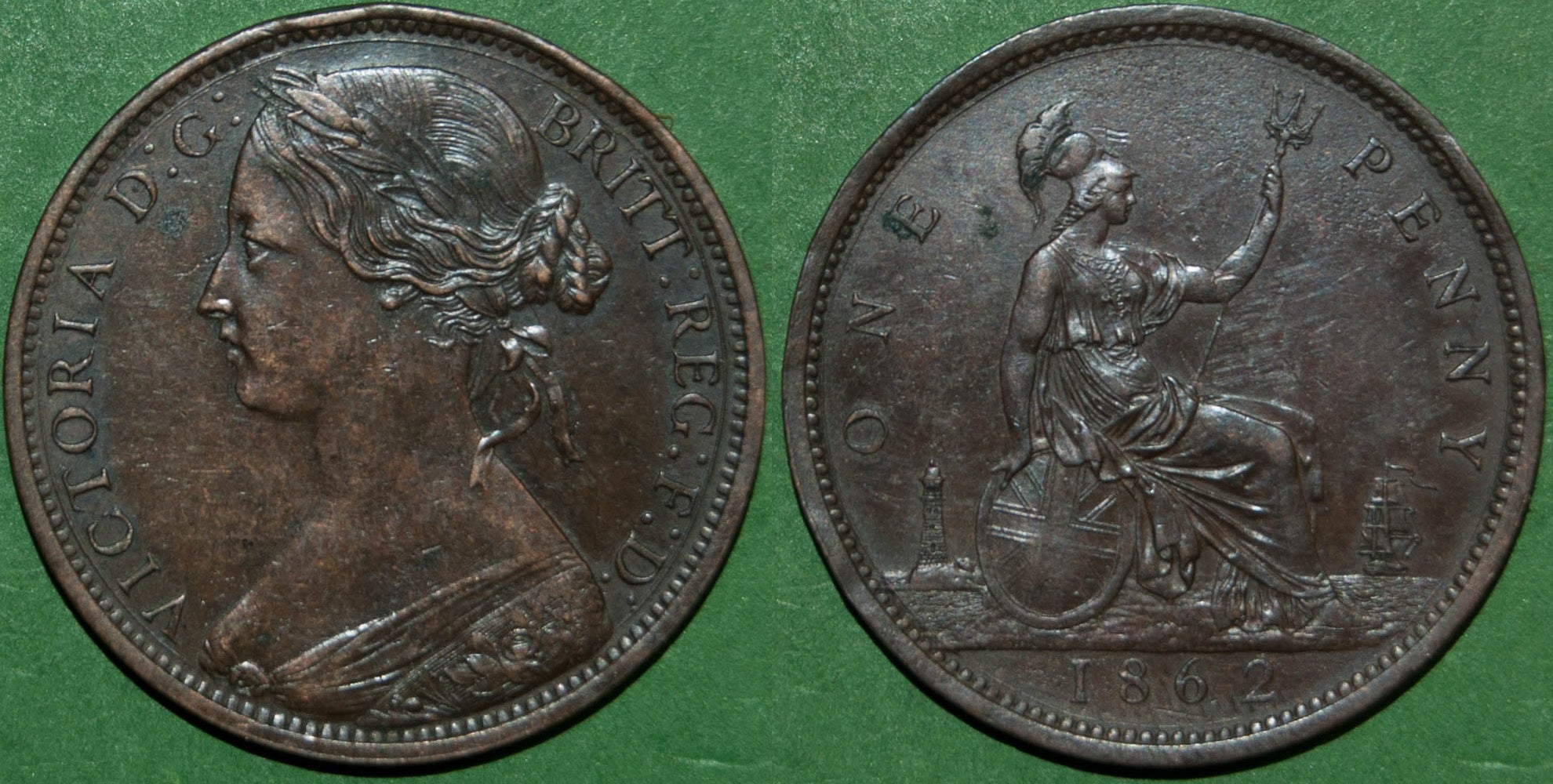
1862 Penny
Sold Out
S3954, Freeman 39, Gouby BP 1862C. Victoria 1862 bun head penny Surface marks with the odd spot of verdigris, but little wear. Grade: nEF

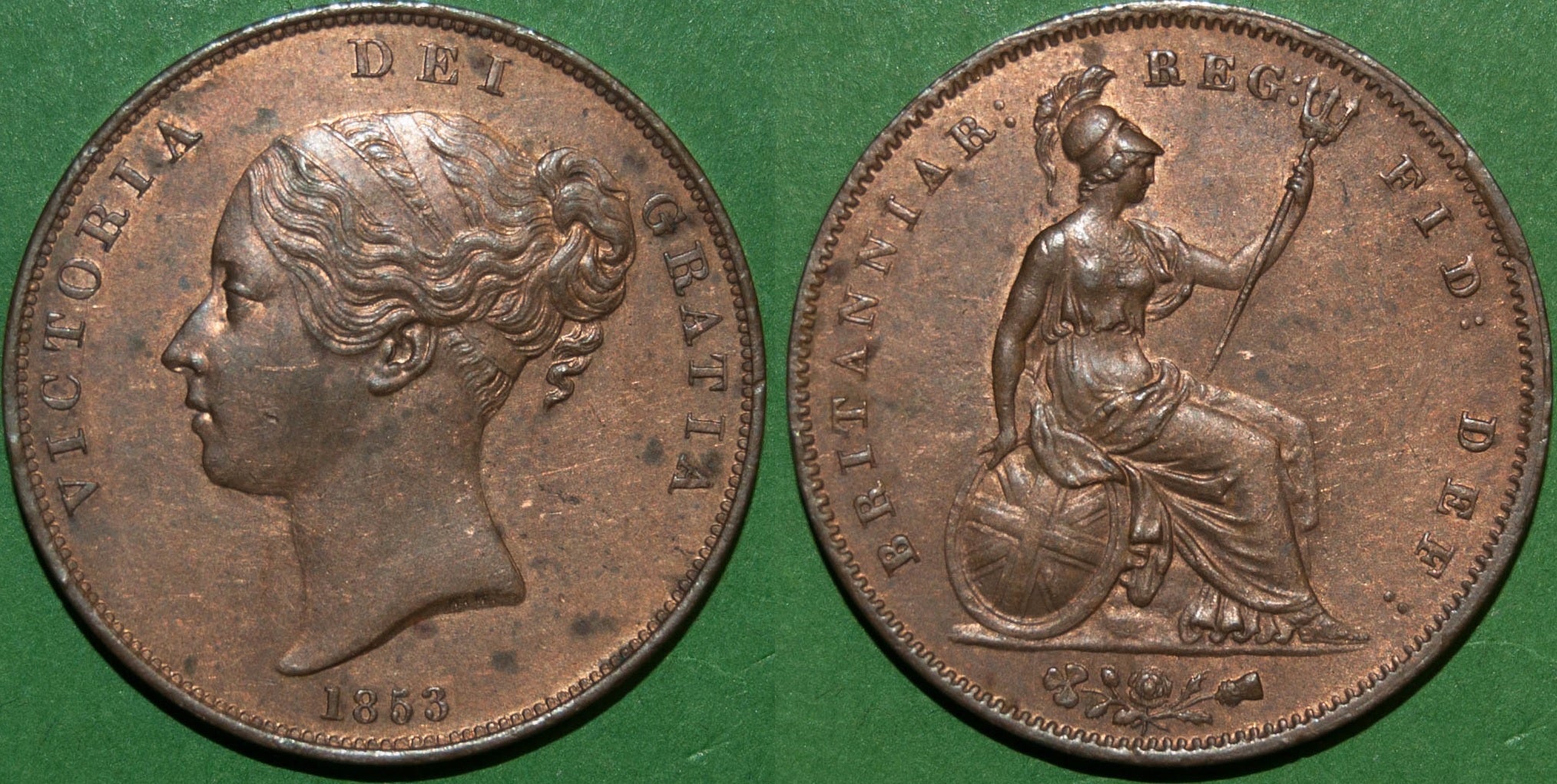
1853OT Penny
£160.00
S3948, P1500. Victoria 1853 penny with ornamental trident reverse and far colon. Comes with a collector's envelope indicating the coin was purchased from Baldwins in 1963. Considerable original colour and...

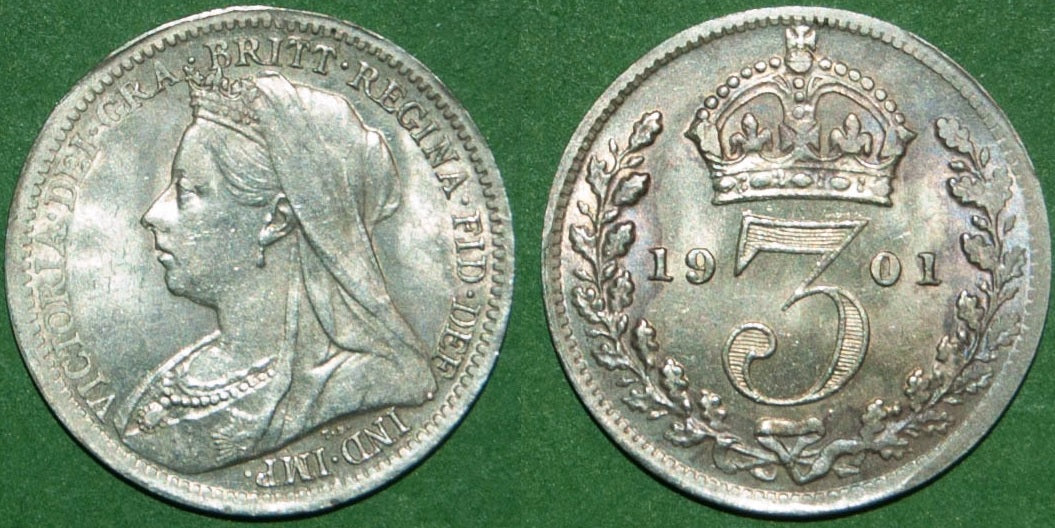
1901 Threepence
£30.00
S3942, Davies 1360, ESC 3454 (2113). Victoria veiled head 1901 threepence. The barest trace of wear and a slightly defective rim from 8-10 o'clock Grade: gEF

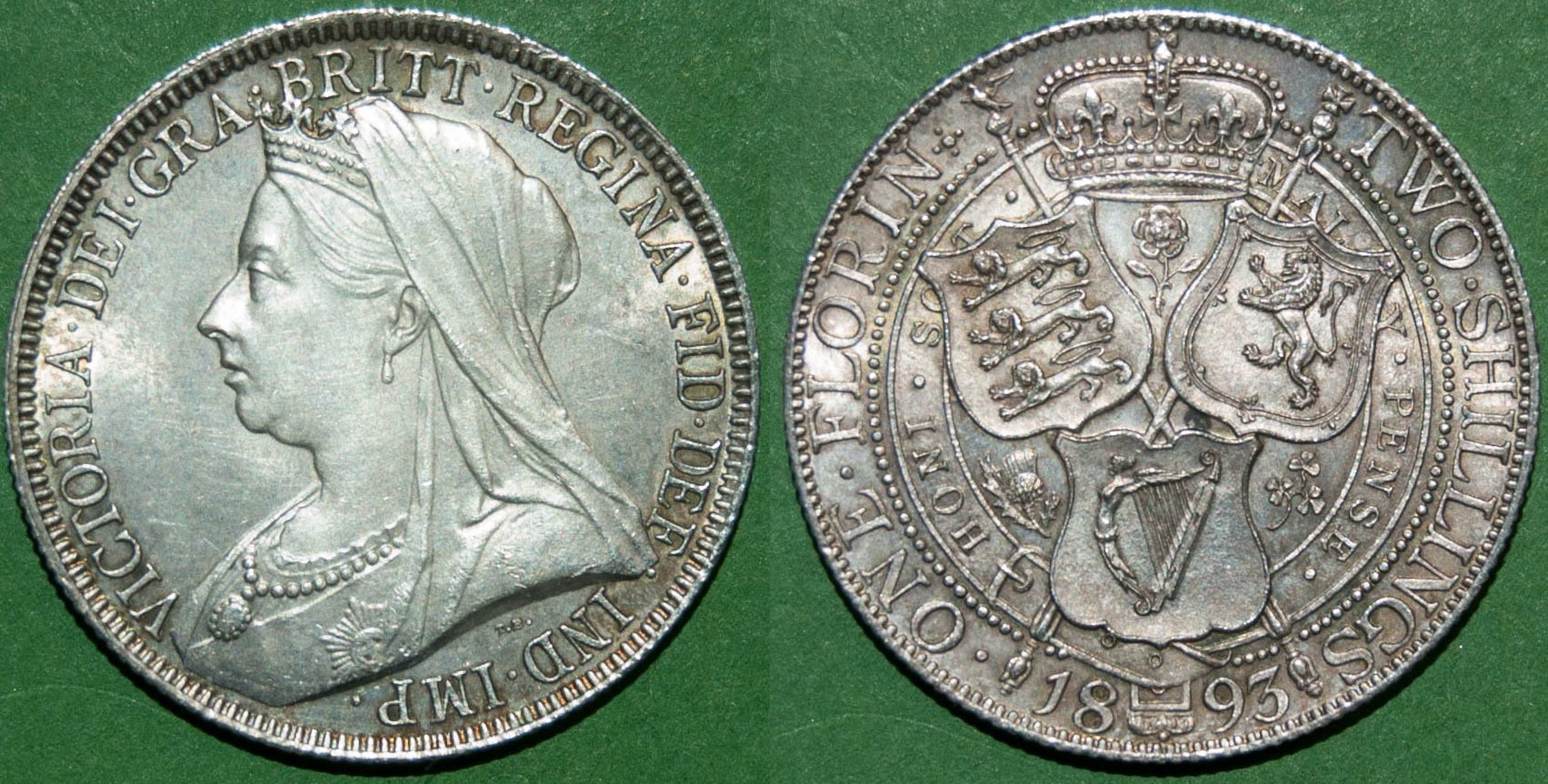
1893 Florin
£240.00
S3939, Davies 830, ESC 2962 (876). Victoria 1893 veiled head florin Practically as struck Grade: Unc

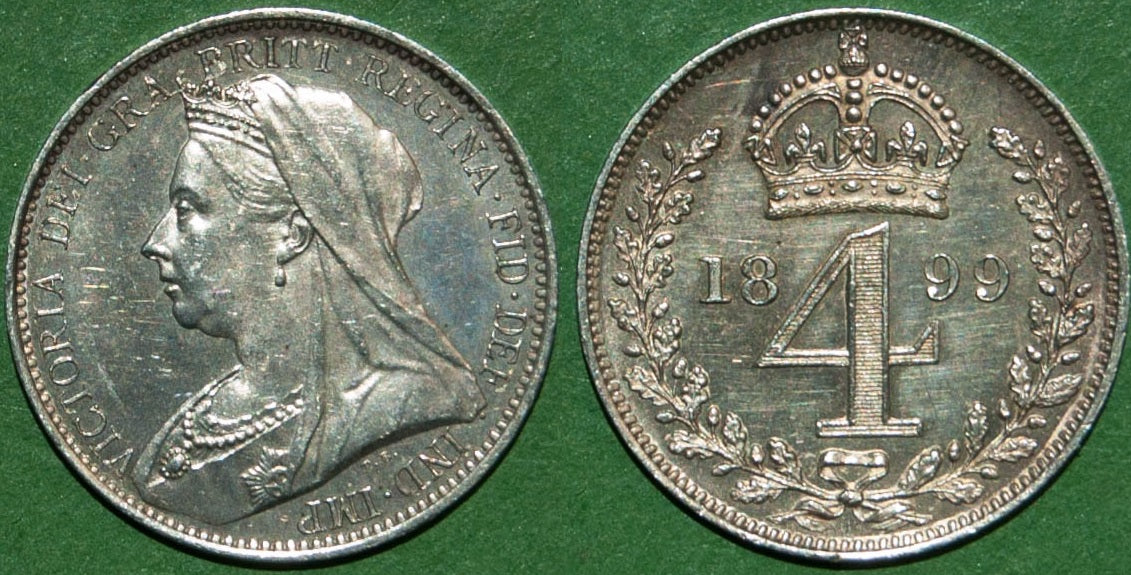
1899 Maundy Fourpence
£48.00
S3944, Davies 1486pt, Robinson 671. Victoria 1899 veiled head Maundy 4d. Brilliant, but a few marks. Grade: gEF

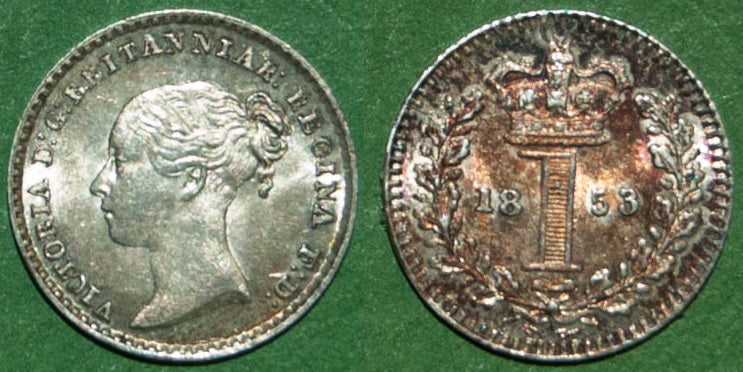
1853 Maundy Penny
£57.00
S3920, Davies 1415pt, Robinson 455. Victoria 1853 Maundy penny. Light friction to the high points, the reverse with an attractive red tone Grade: EF+

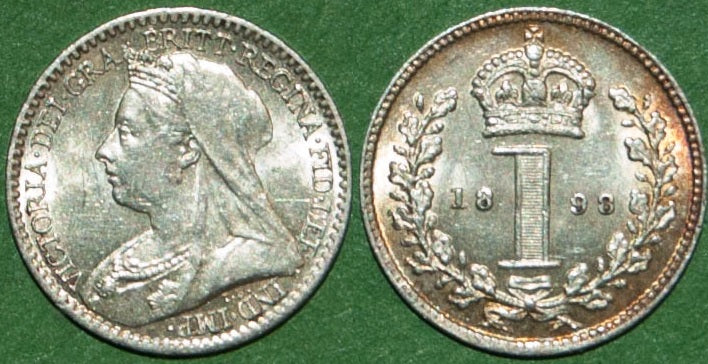
1898 Maundy Penny
£52.50
S3947, Davies 1485pt, Robinson 664. Victoria 1898 veiled head Maundy penny. Lightly toning Grade: Unc

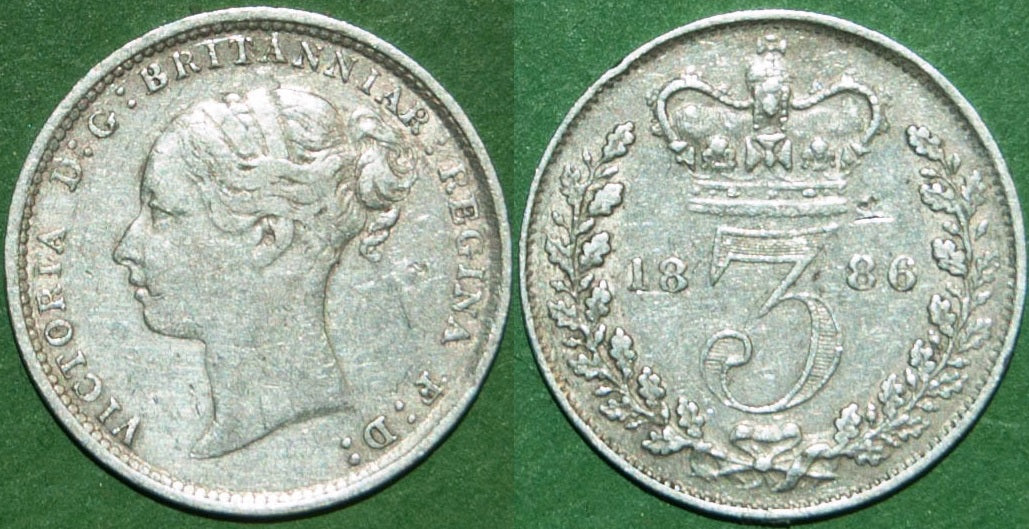
1886 Threepence
£37.50
S3914D, Davies 1314, ESC 3433 (2093). Victoria 1886 third bust 3d. A few marks and wear from circulation Grade: nVF

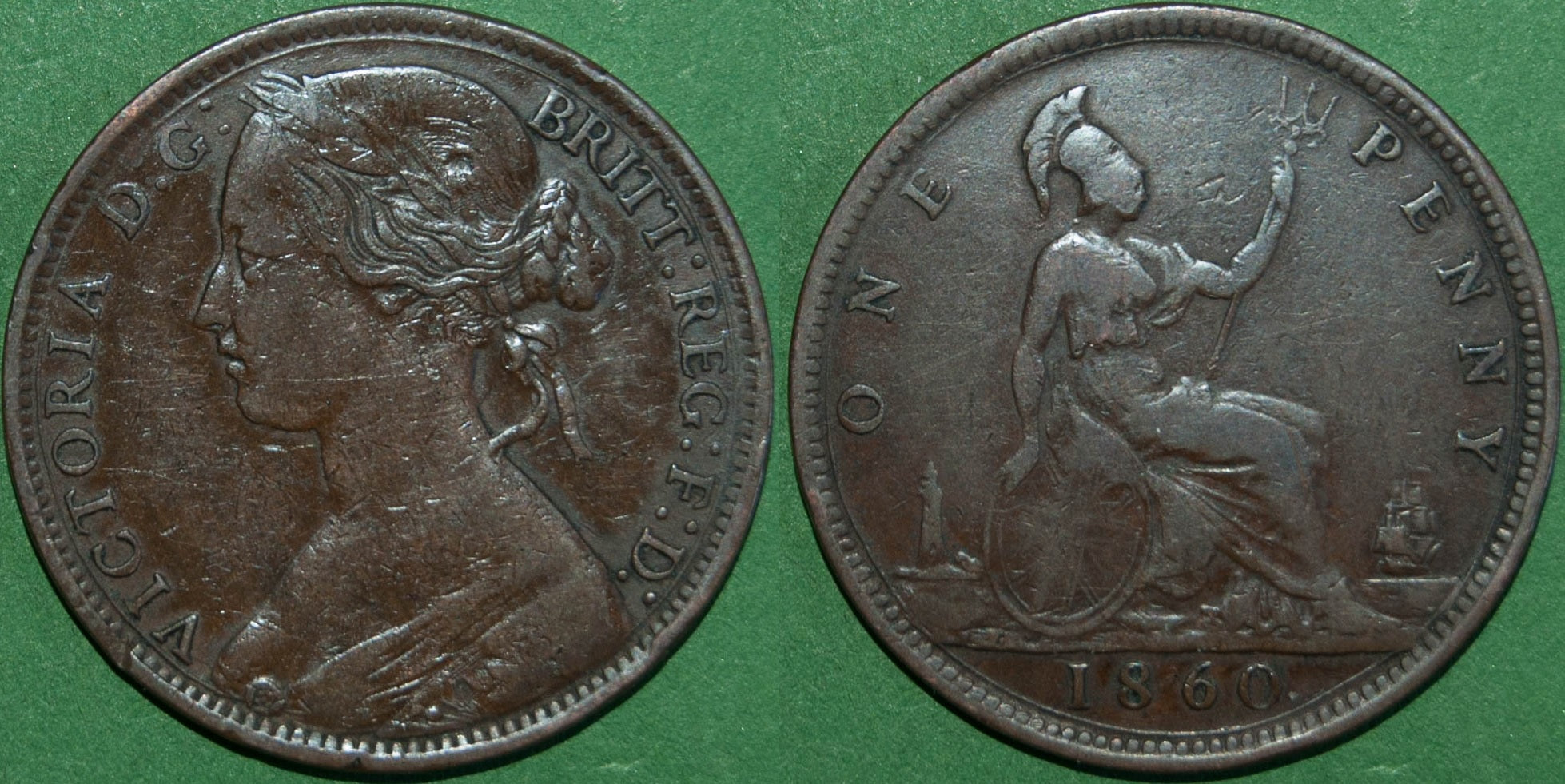
1860 Penny
£40.00
S3954, Freeman 17, Gouby BP 1860Y. Victoria 1860 toothed border penny with Gouby dies J+d, a rare obverse for this year. General wear to both sides Grade: gFine/Fine

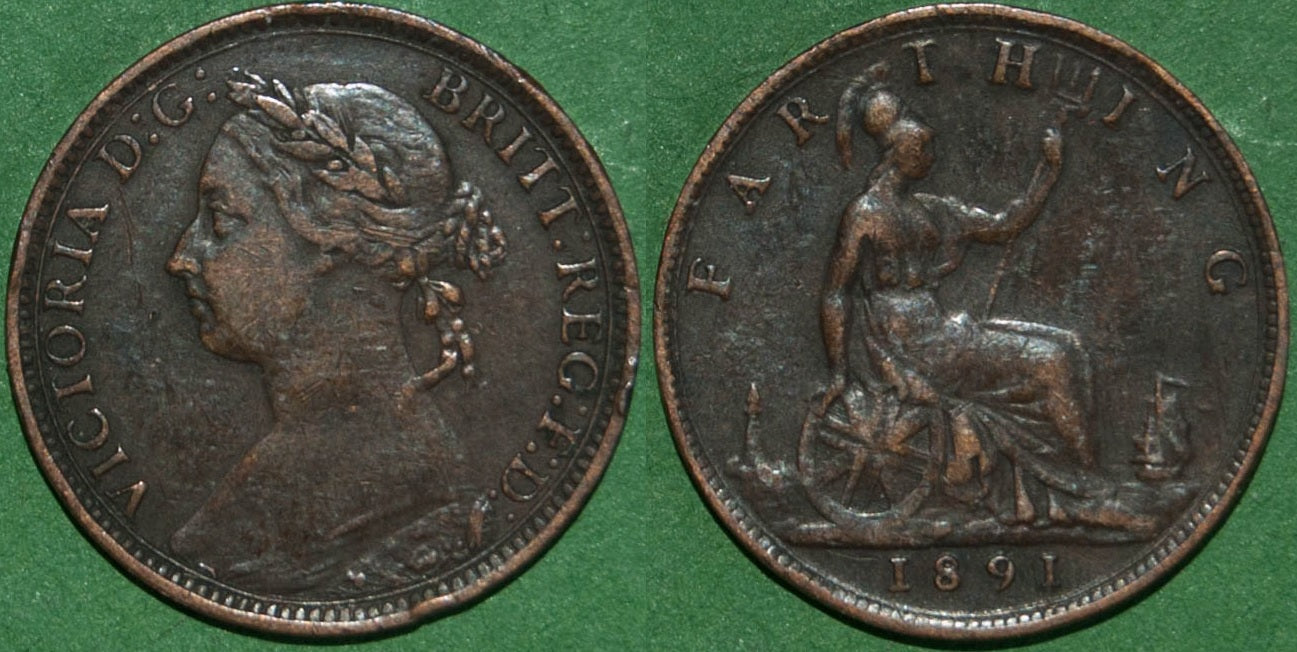
1891 Farthing
£3.00
S3958, Freeman 564. Victoria 1891 bun head farthing. General wear with some marks Grade: aVF

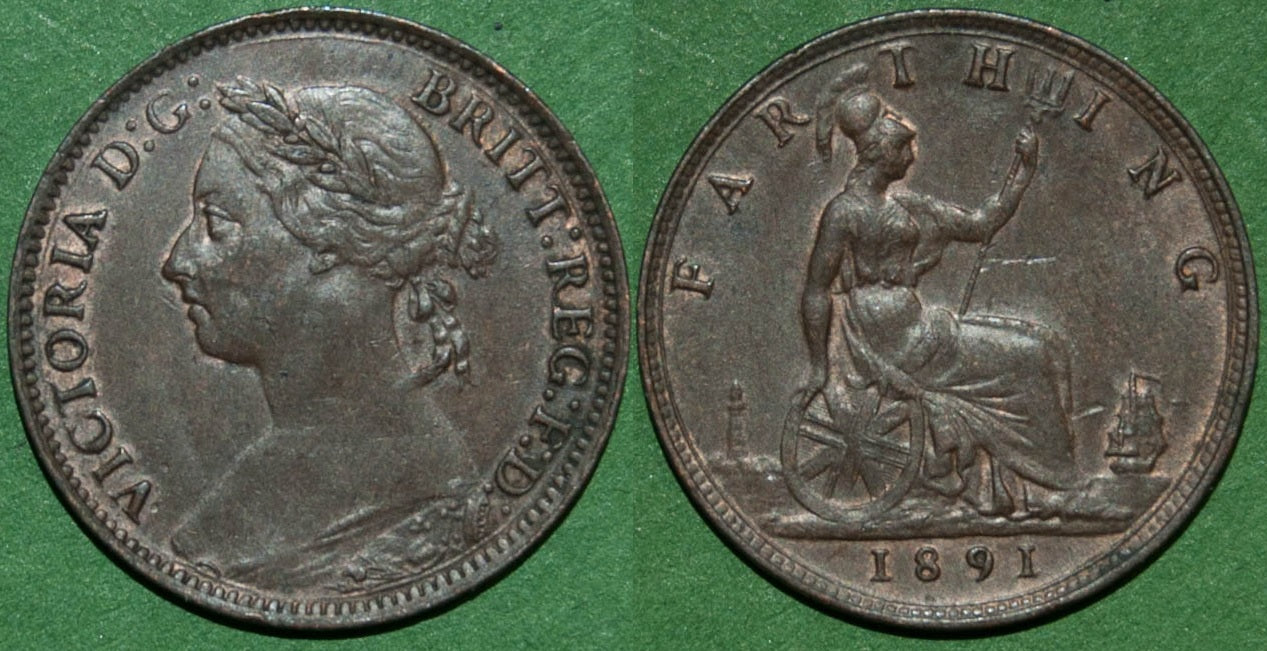
1891 Farthing
Sold Out
S3958, Freeman 564. Victoria 1891 bun head farthing Minimal wear, the obverse weakly struck Grade: gEF

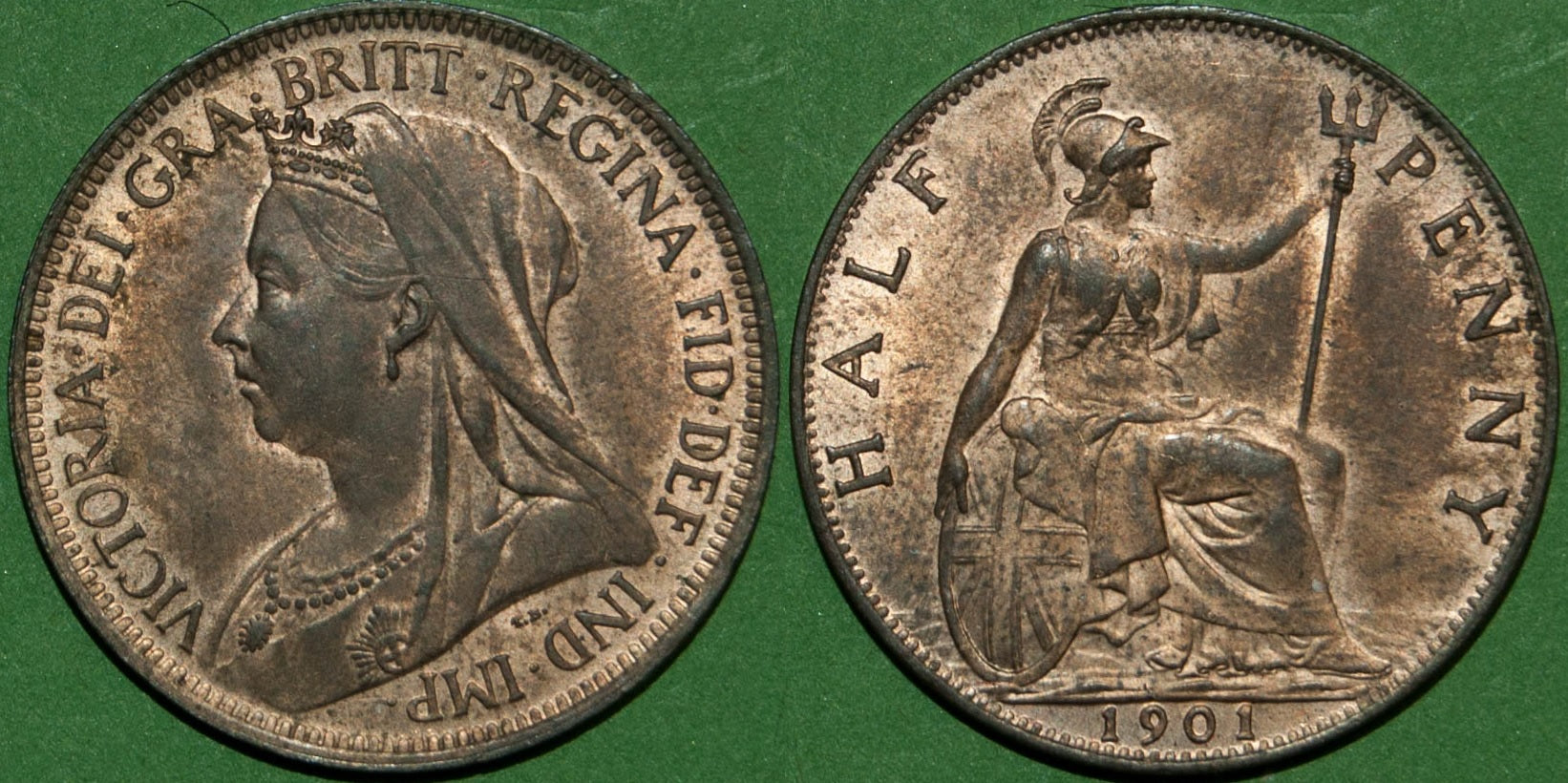
1901 Halfpenny
£28.00
S3962, Freeman 378. Victoria 1901 veiled head halfpenny. Minimal wear, toning in parts Grade: gEF

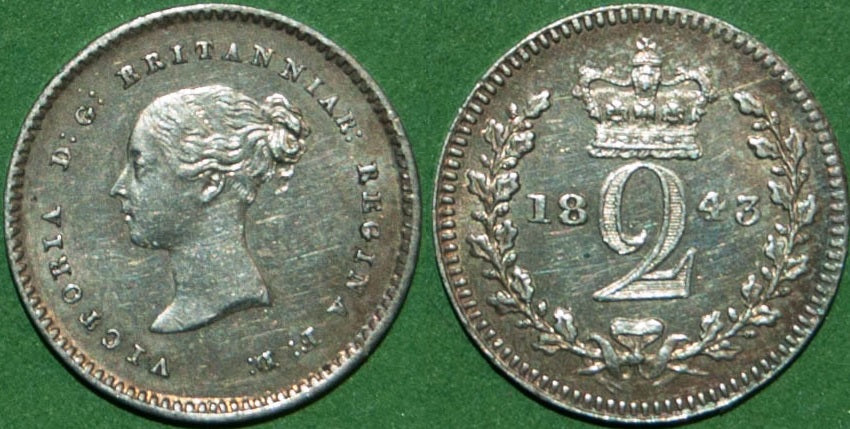
1843 Maundy Twopence
£48.00
S3919, Davies 1405pt,, ESC 3486pt. Victoria 1843 Maundy twopence. Brilliant, with a couple light marks Grade: gEF

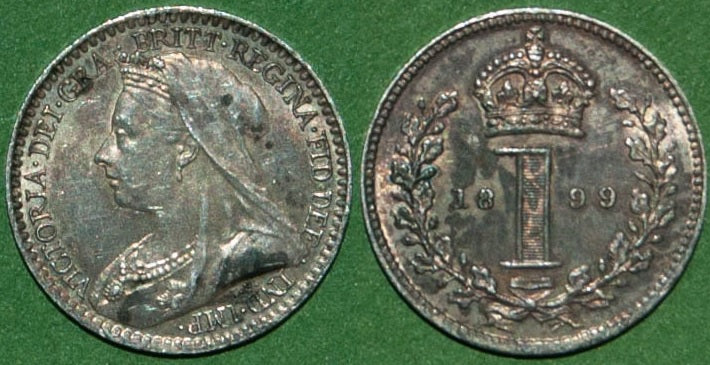
1899 Maundy Penny
£37.50
S3947, Davies 1486pt, ESC 3557pt. Victoria 1899 Maundy penny Toned with a trace of wear Grade: EF+/gEF

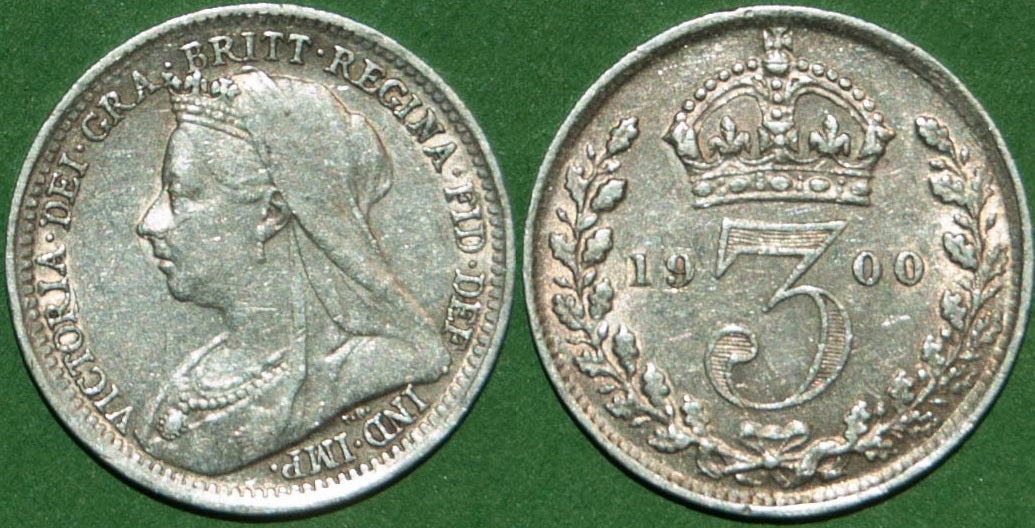
1900 Threepence
£15.00
S3942, Davies 1359, ESC 3453 (2112). Victoria 1900 veiled head currency threepence. Some wear and marks from circulation Grade: gVF

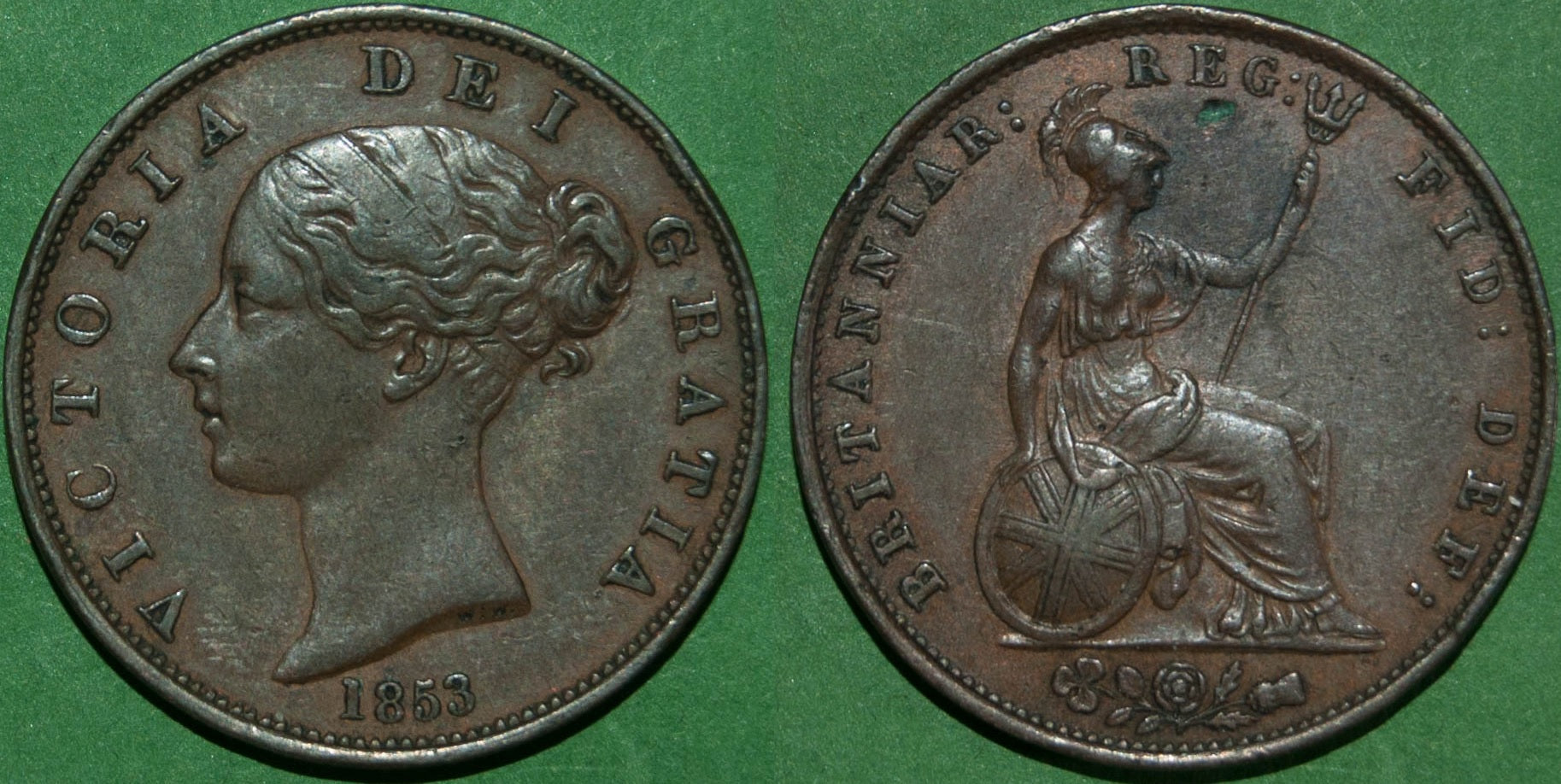
1853 Halfpenny
£12.00
S3949, Peck 1539. Victoria 1853 halfpenny Even wear to both sides and a small verdigris spot on the reverse Grade: VF

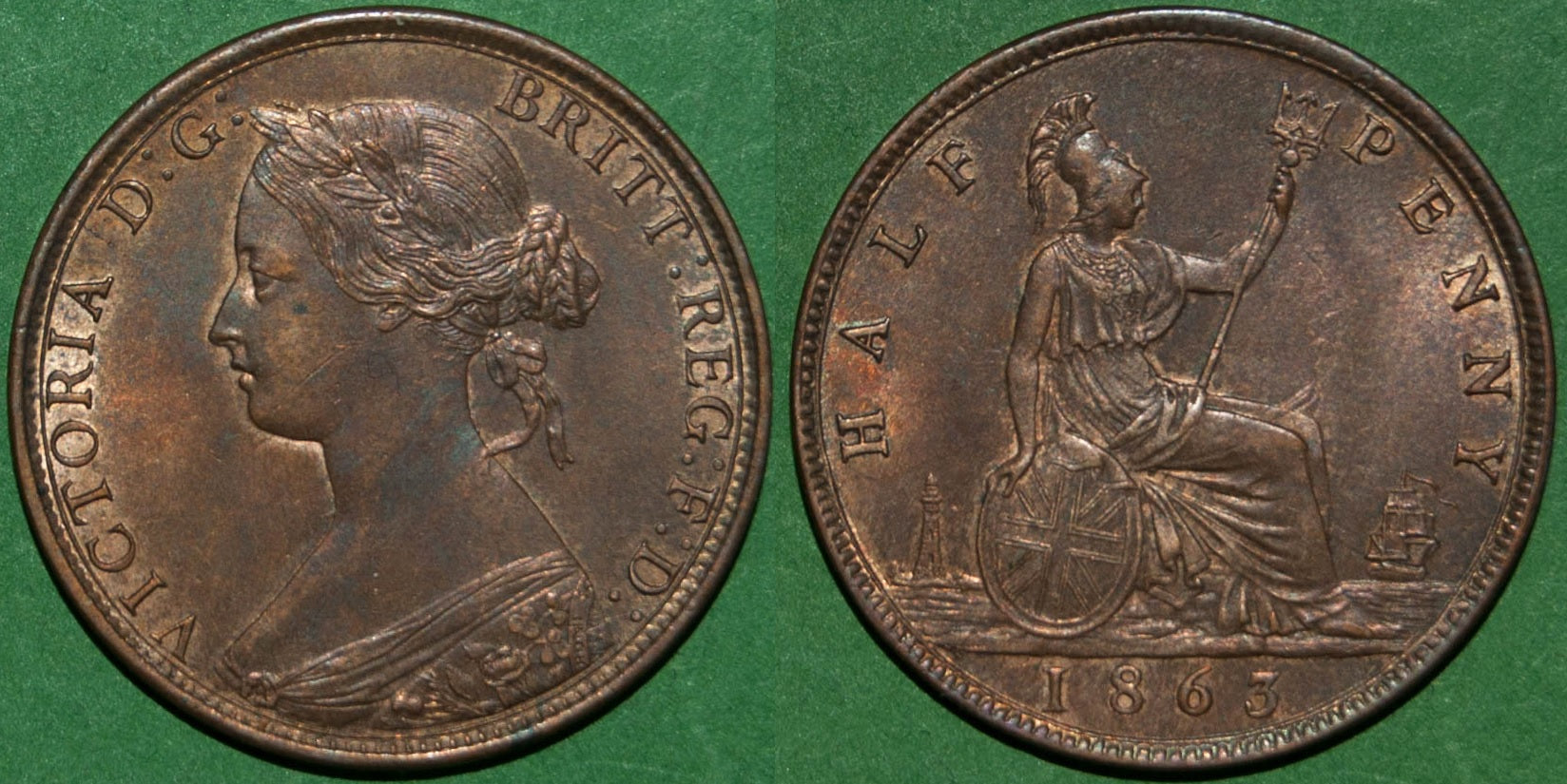
1863 Halfpenny
£50.00
S3956, Freeman 294. Victoria 1863 bun head halfpenny with a short 3 in the date. Light wear to both sides Grade: aEF

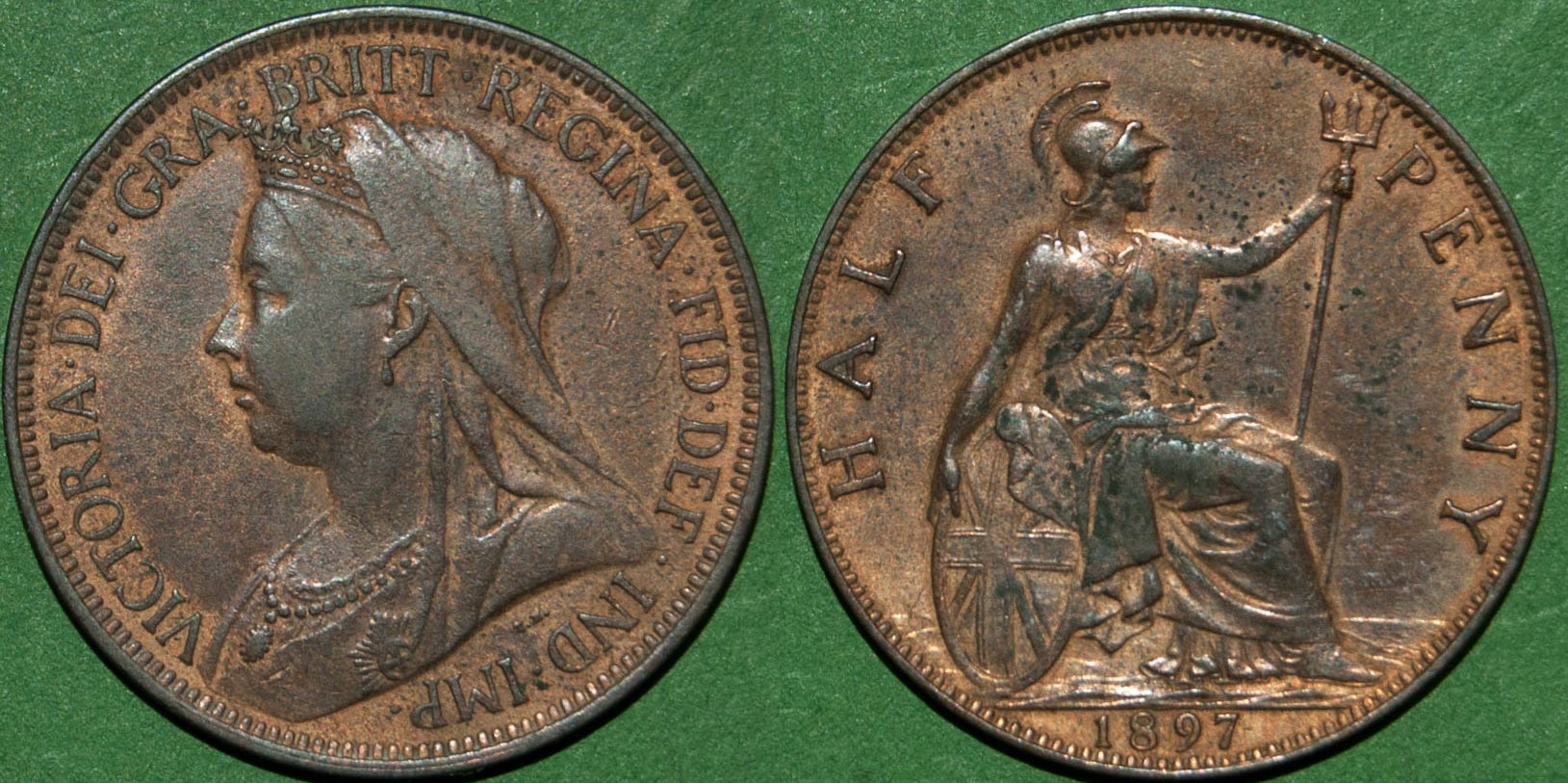
1897 Halfpenny
£8.00
S3962, Freeman 373. Victoria 1897 veiled head halfpenny with normal tide level. Toned with some wear to both sides Grade: VF+

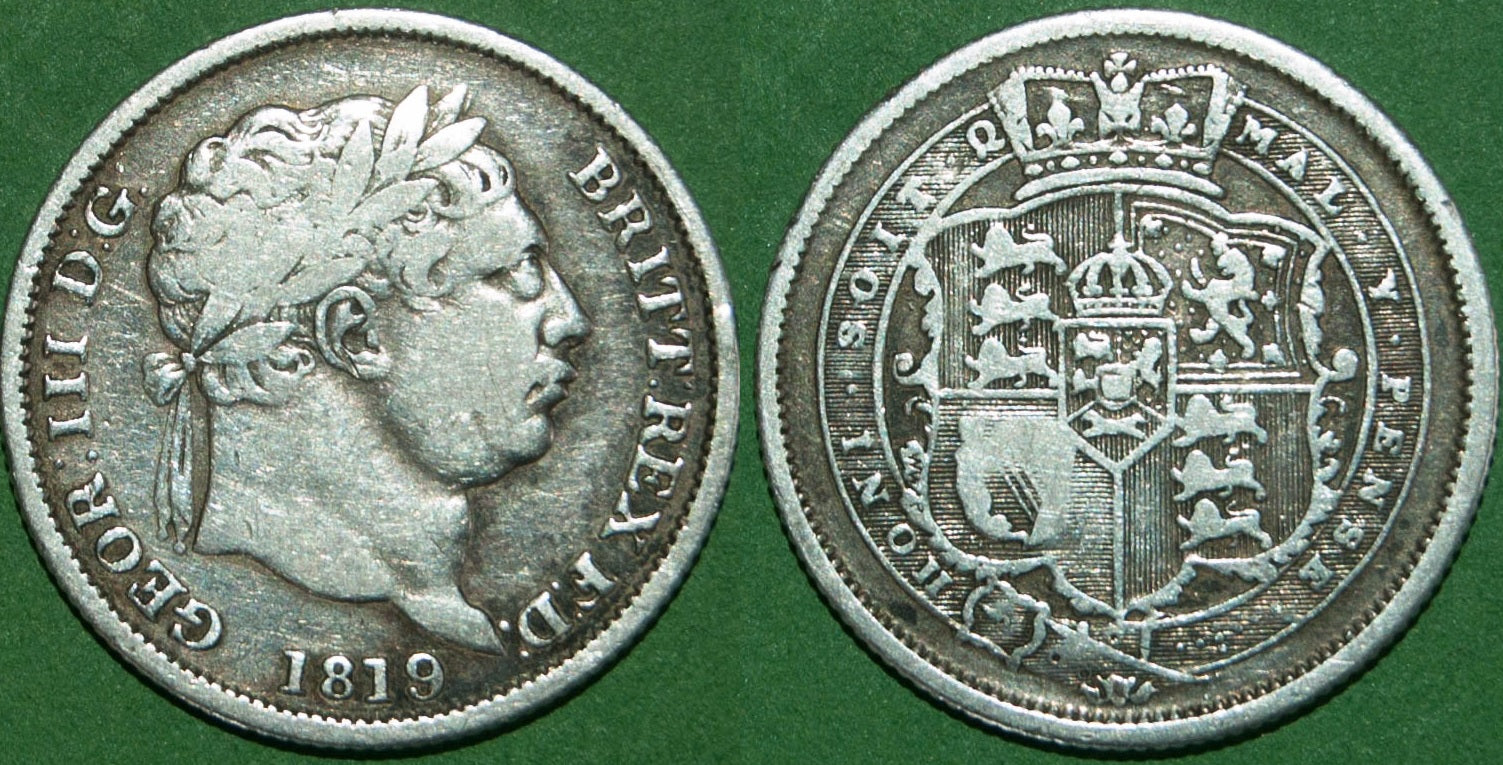
1819 Shilling
Sold Out
S3790, Davies 86, ESC 2152 (1235). George III 1819 'New Coinage' shilling. General wear and problem free. Grade: Fine+

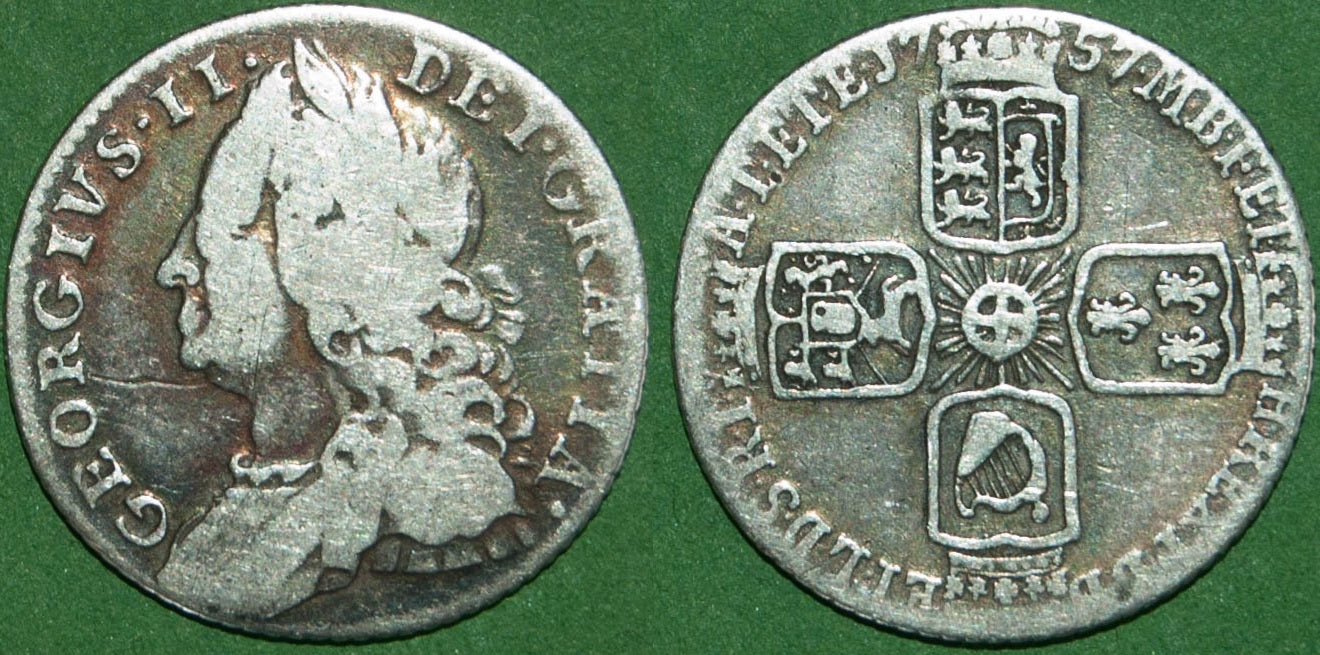
1757 Sixpence
Sold Out
S3711, ESC 1762 (1622). George II 1757 old head sixpence. Toned. Grade: Fine

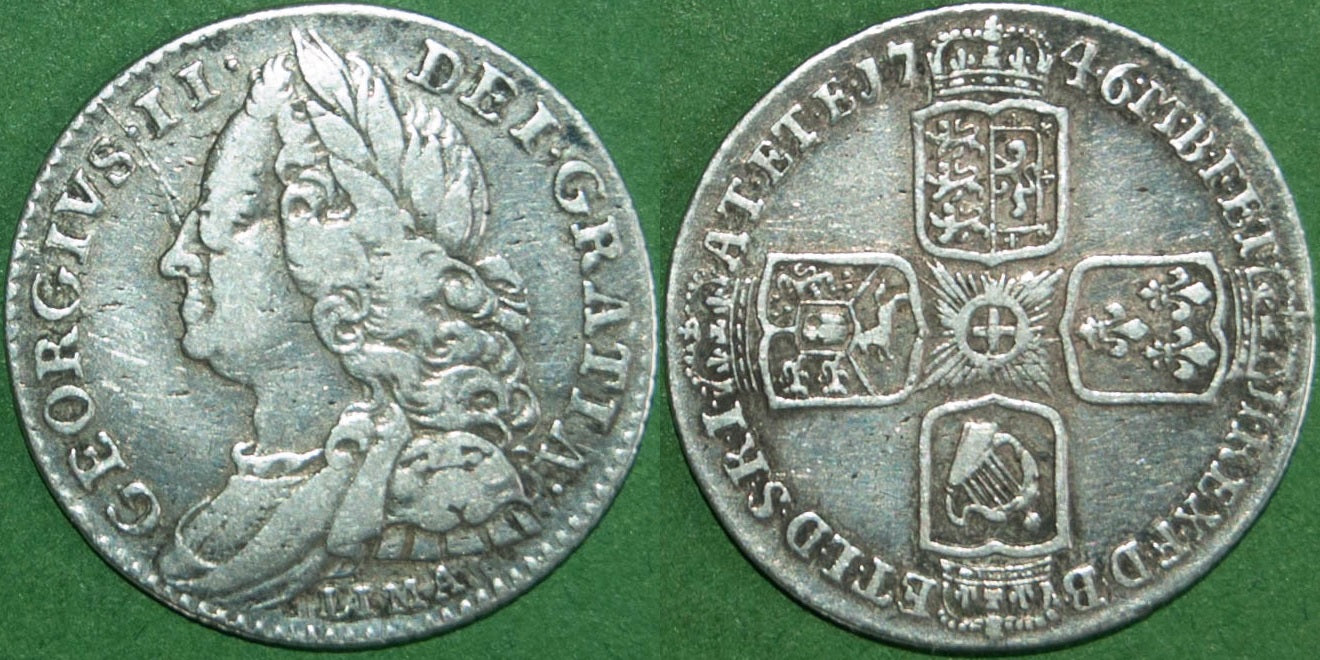
1746 LIMA Sixpence
Sold Out
S3710A, ESC 1757 (1618). George II 1746 LIMA 6d. General even wear with obverse die flaws Grade: gFine

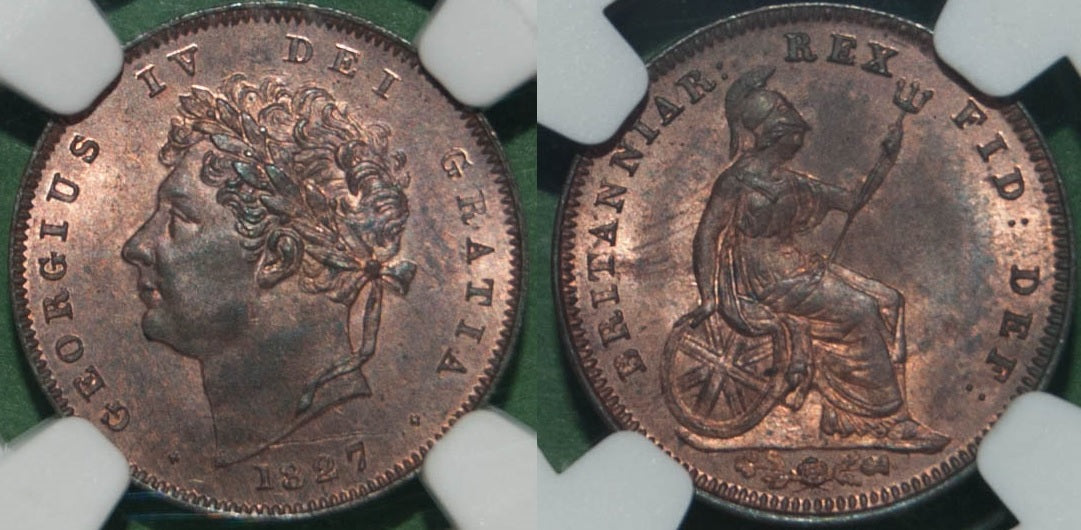
1827 Third Farthing, NGC MS64RB
£185.00
S3827, P1453. George IV 1827 copper third farthing issued for use in Malta. Slabbed NGC MS64RB. Scarce. Considerable lustre. Grade: Unc

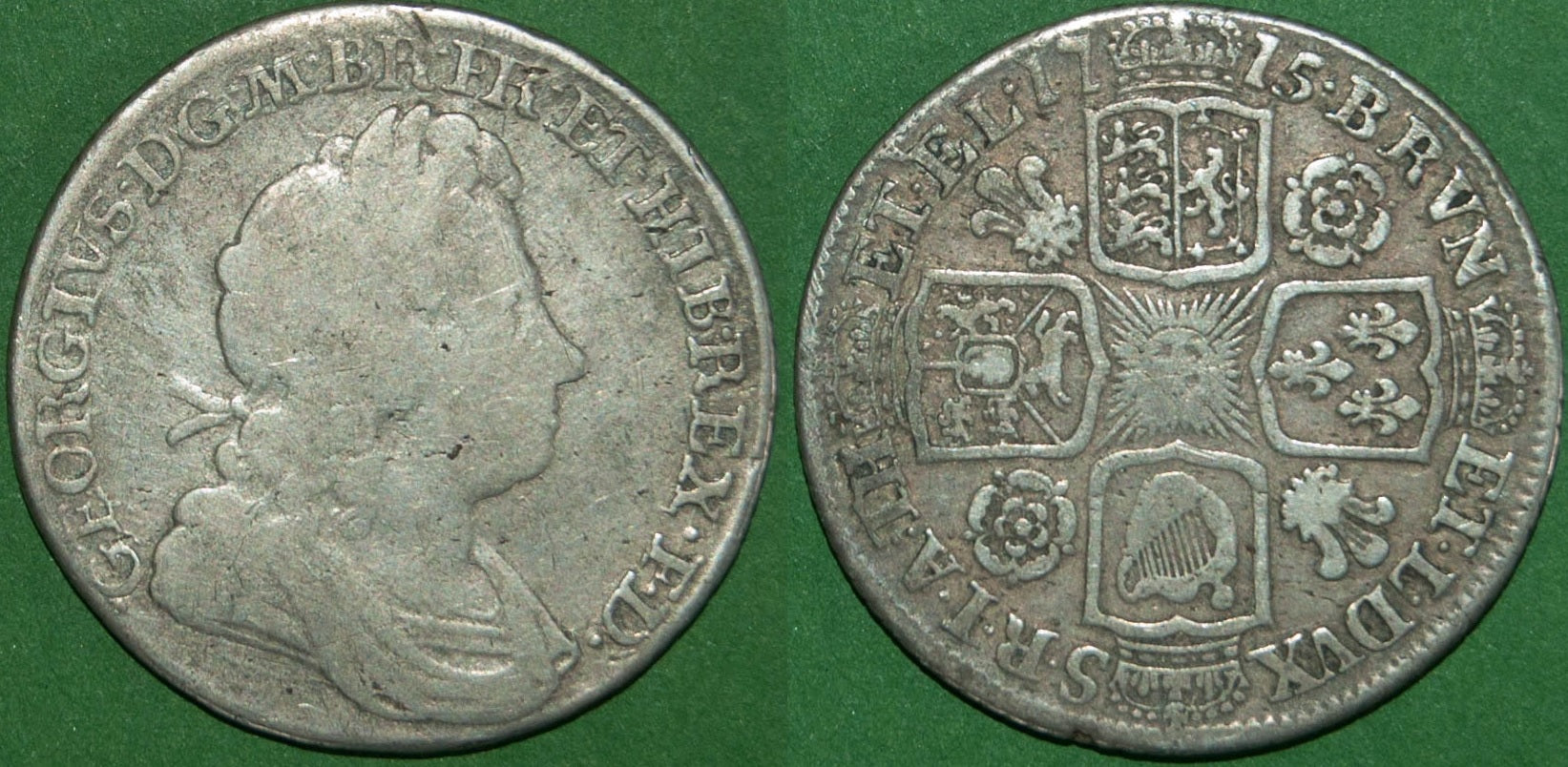
George I 1715 Shilling
Sold Out
S3645, ESC 1560 (1162). George I 1715 roses and plumes shilling. The first year of issue. A weak bust with considerable wear, the reverse better. Grade: nFine/Fine

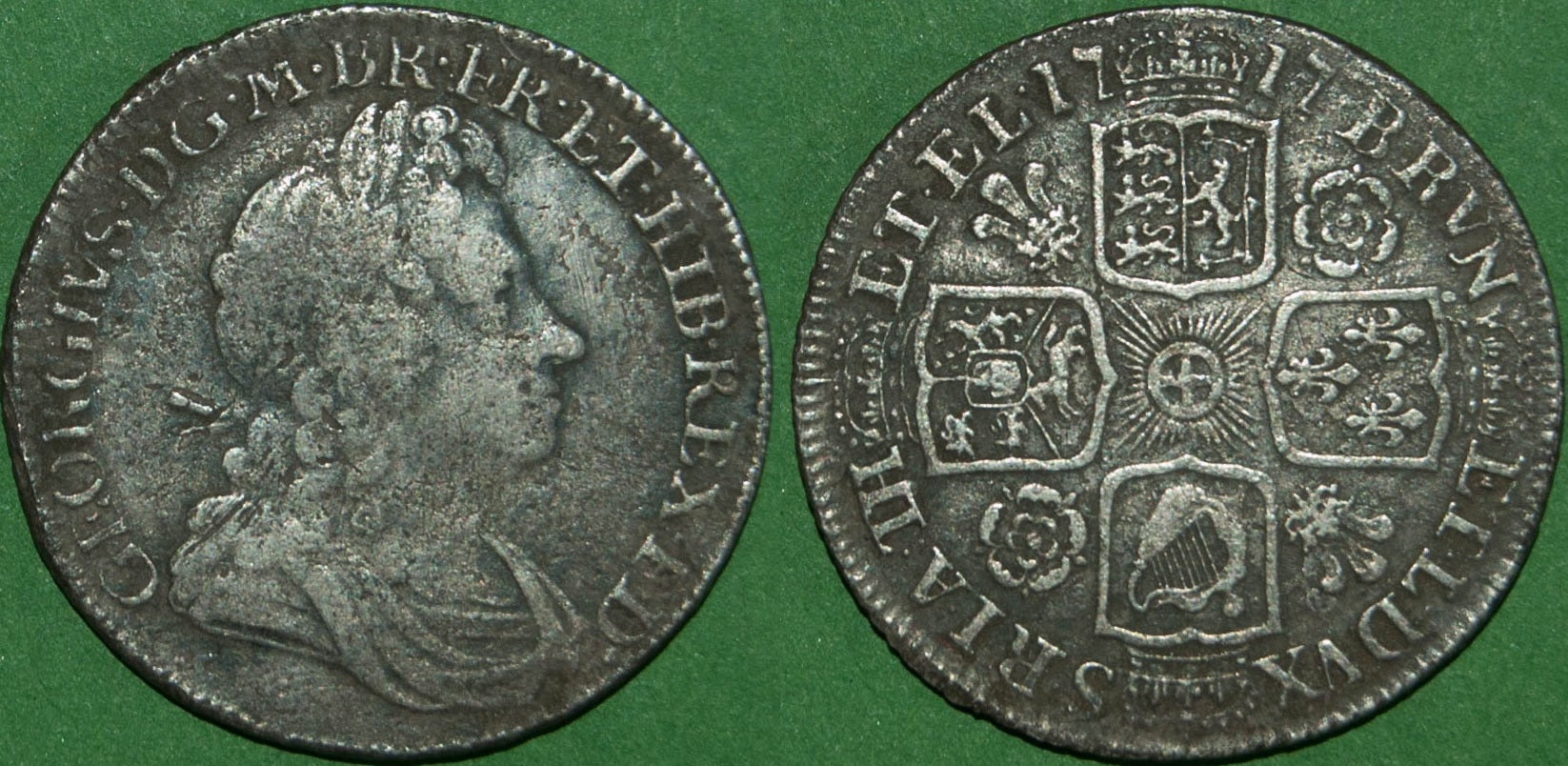
George I 1717 Shilling
Sold Out
S3645, ESC 1564 (1164). George I 1717 roses and plumes shilling. Scarce. A reasonable grade coin, but pitted surfaces. Dark tone. Grade: nVF

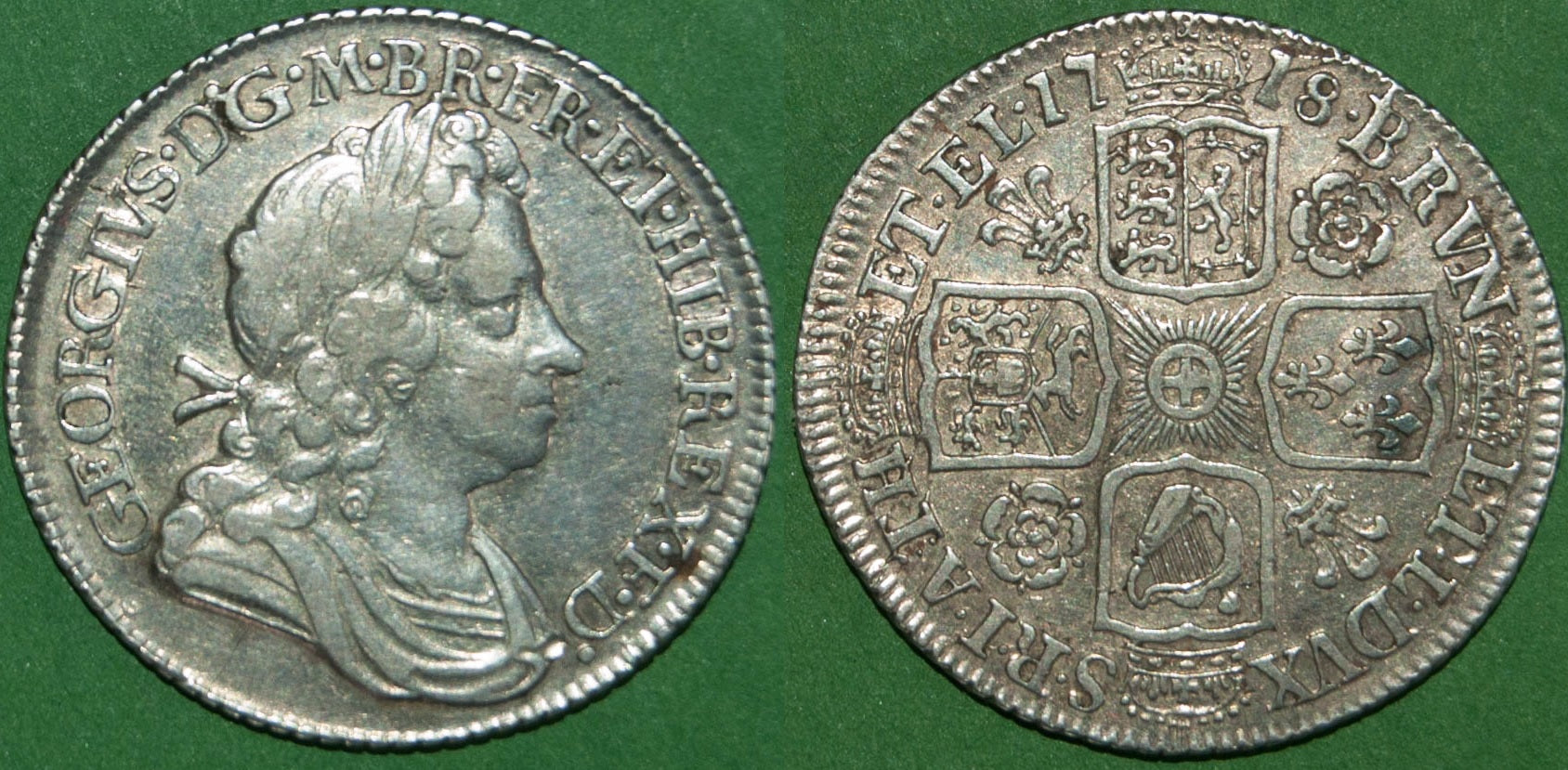
George I 1718 Shilling
Sold Out
S3645, ESC 1566 (1165). George I 1718 roses and plumes shilling. Wear to the higher point and quite pleasing. the reverse struck from a cracked die. Grade: VF+

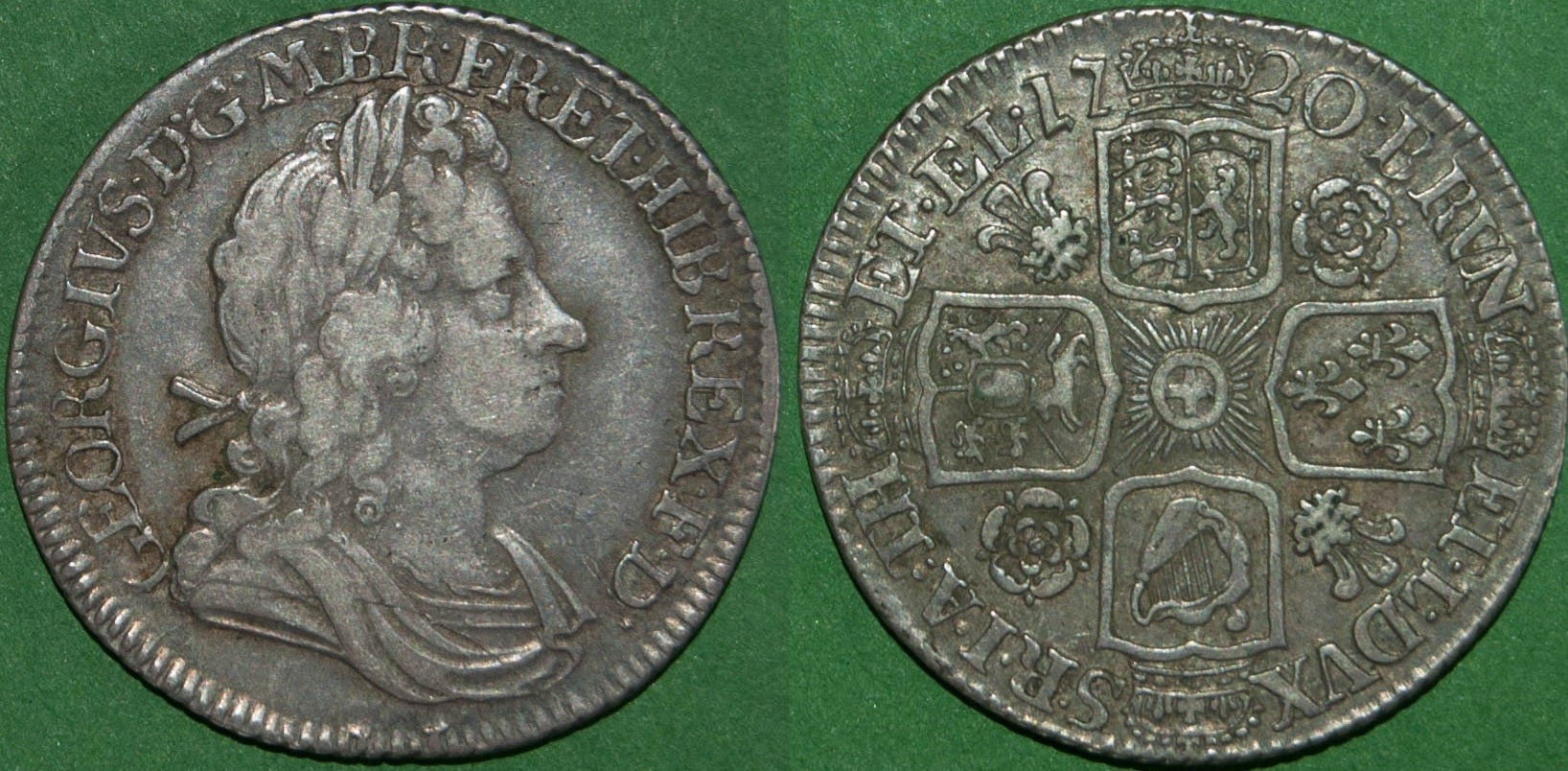
George I 1720 Roses & Plumes Shilling
Sold Out
S3645, ESC 1568 (1167). George I 1720 roses and plumes shilling. Scarce. Toned with even wear, the reverse better. Grade: aVF/gVF

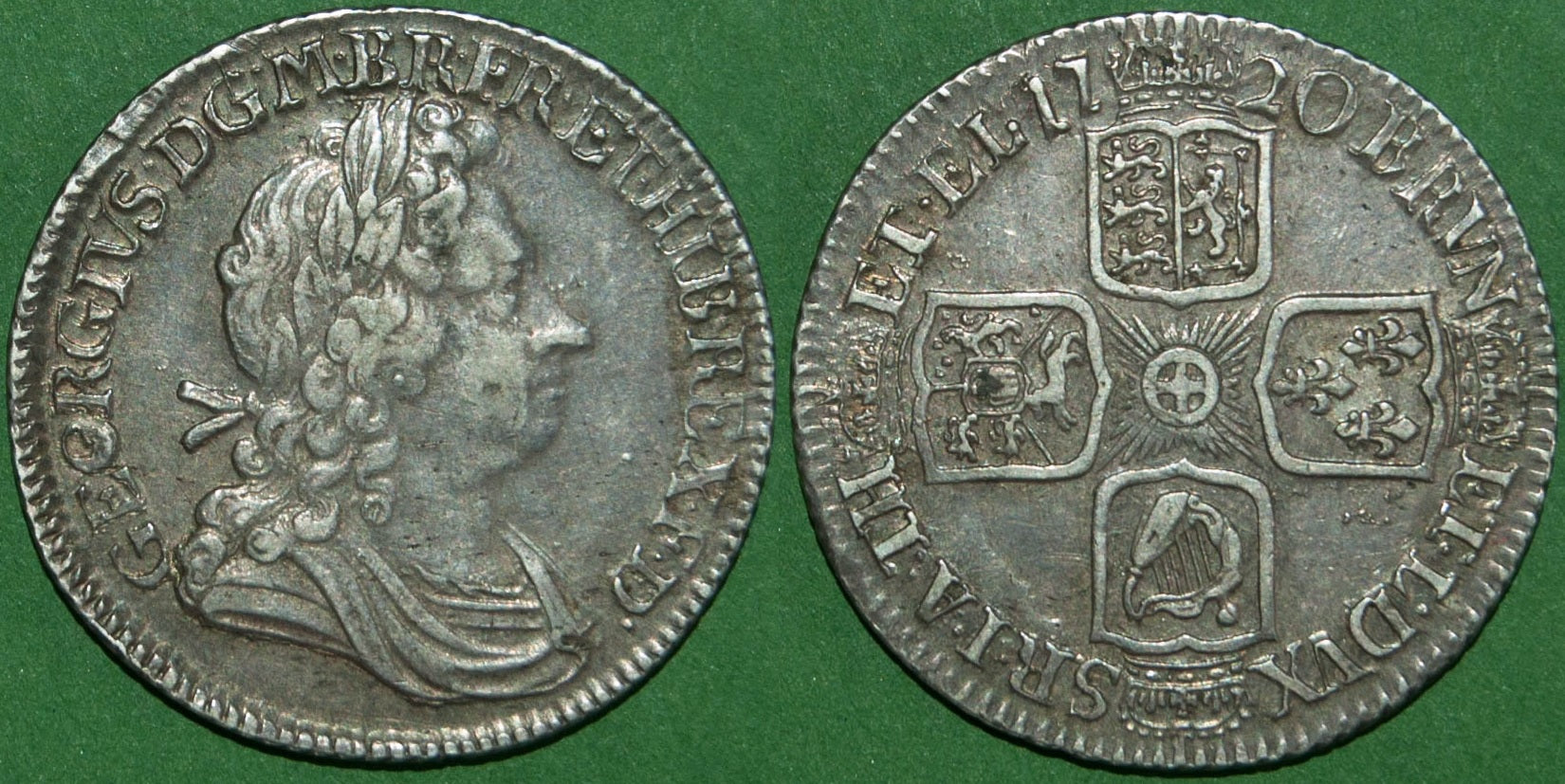
George I 1720 Shilling, Plain Angles
Sold Out
S3646, ESC 1572 (1168). George I 1720 first bust shilling with plain angles. Toned, a deep strike with even wear. Quite attractive. Grade: VF+

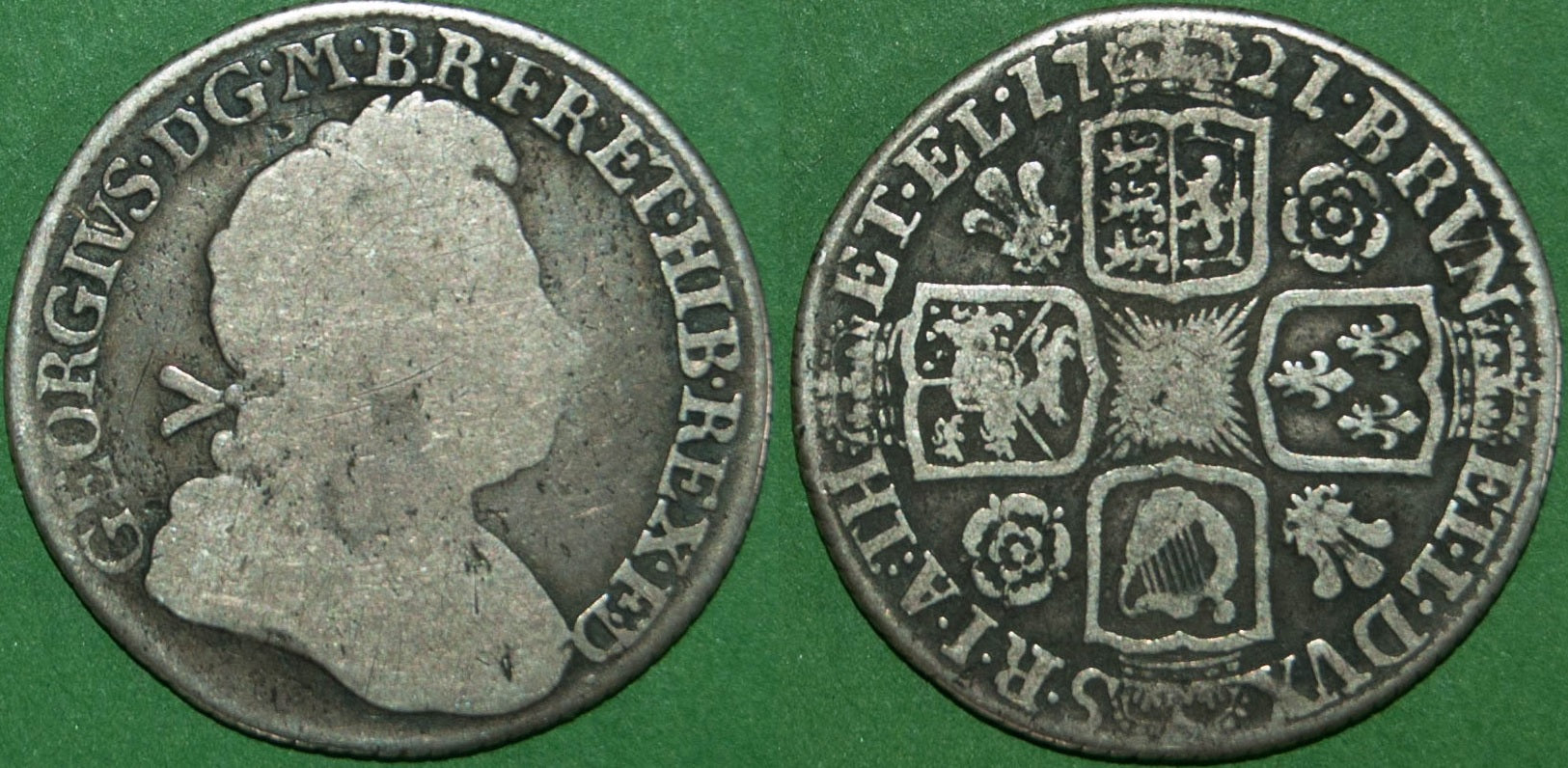
George I 1721 Roses & Plumes Shilling
Sold Out
S3645, ESC 1577 (1171). George I 1721 shilling with roses and plumes in angles. Rare. Worn with a dark tone. Grade: Fair/Fine

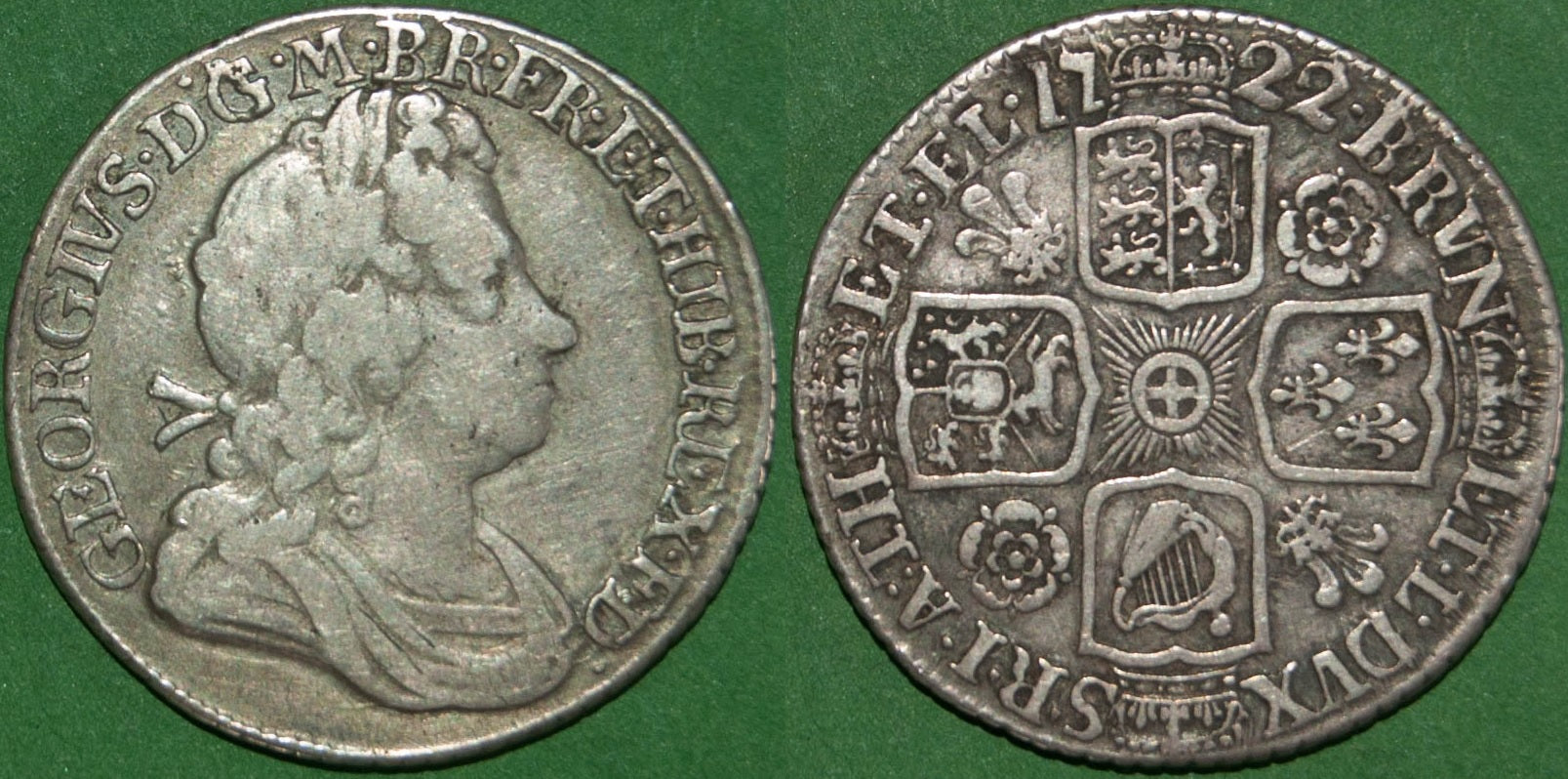
George I 1722 Shilling
Sold Out
S3645, ESC 1581 (1174).. George I 1722 shilling with roses and plumes in angles. Scarce. General wear. Grade: gFine

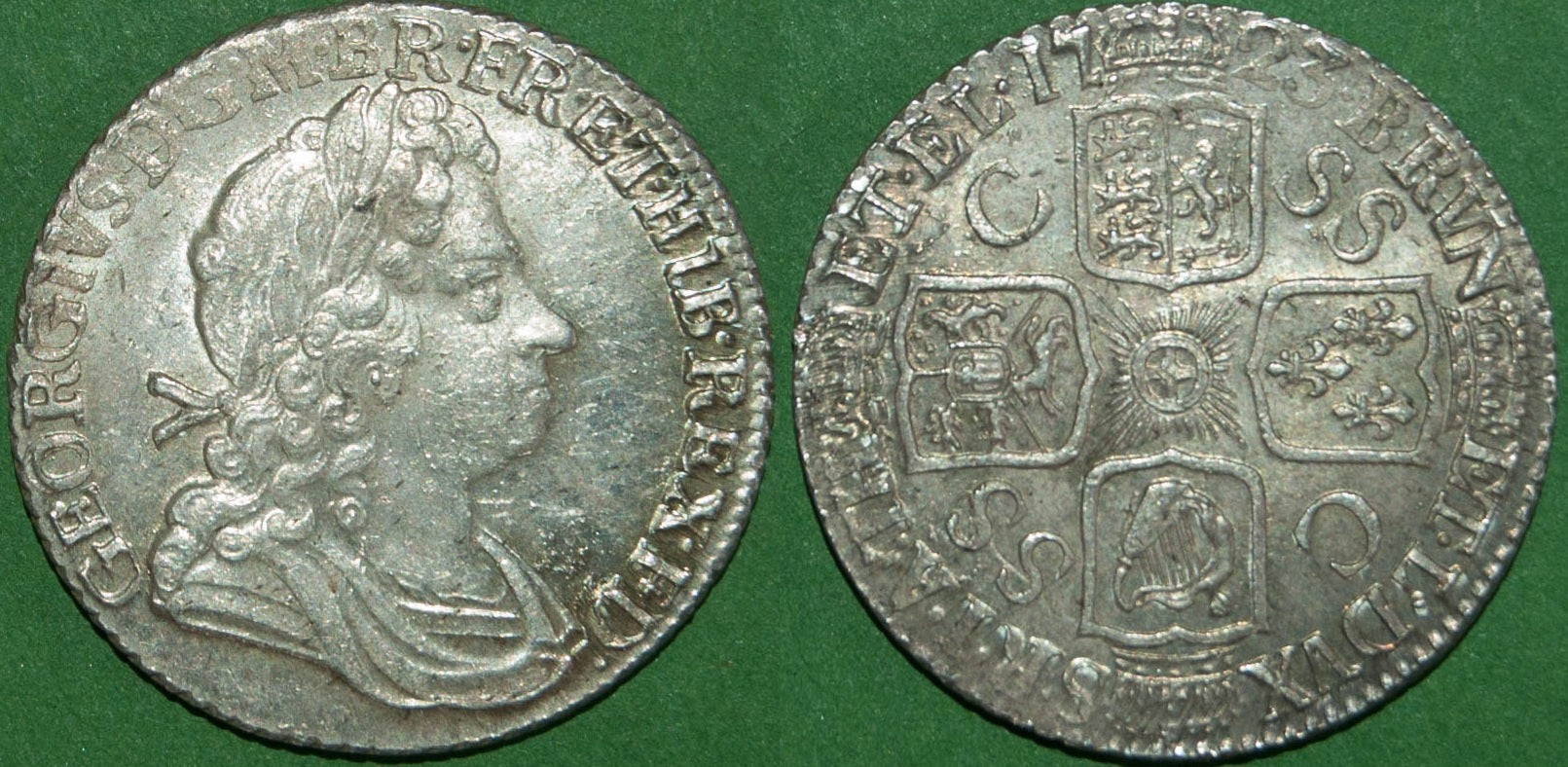
George I 1723 SSC Shilling, First Bust
Sold Out
S3647, ESC 1586 (1176). George I 1723 first bust SSC shilling. Light wear to both sides, this struck from a pair of rusted dies. Grade: EF+

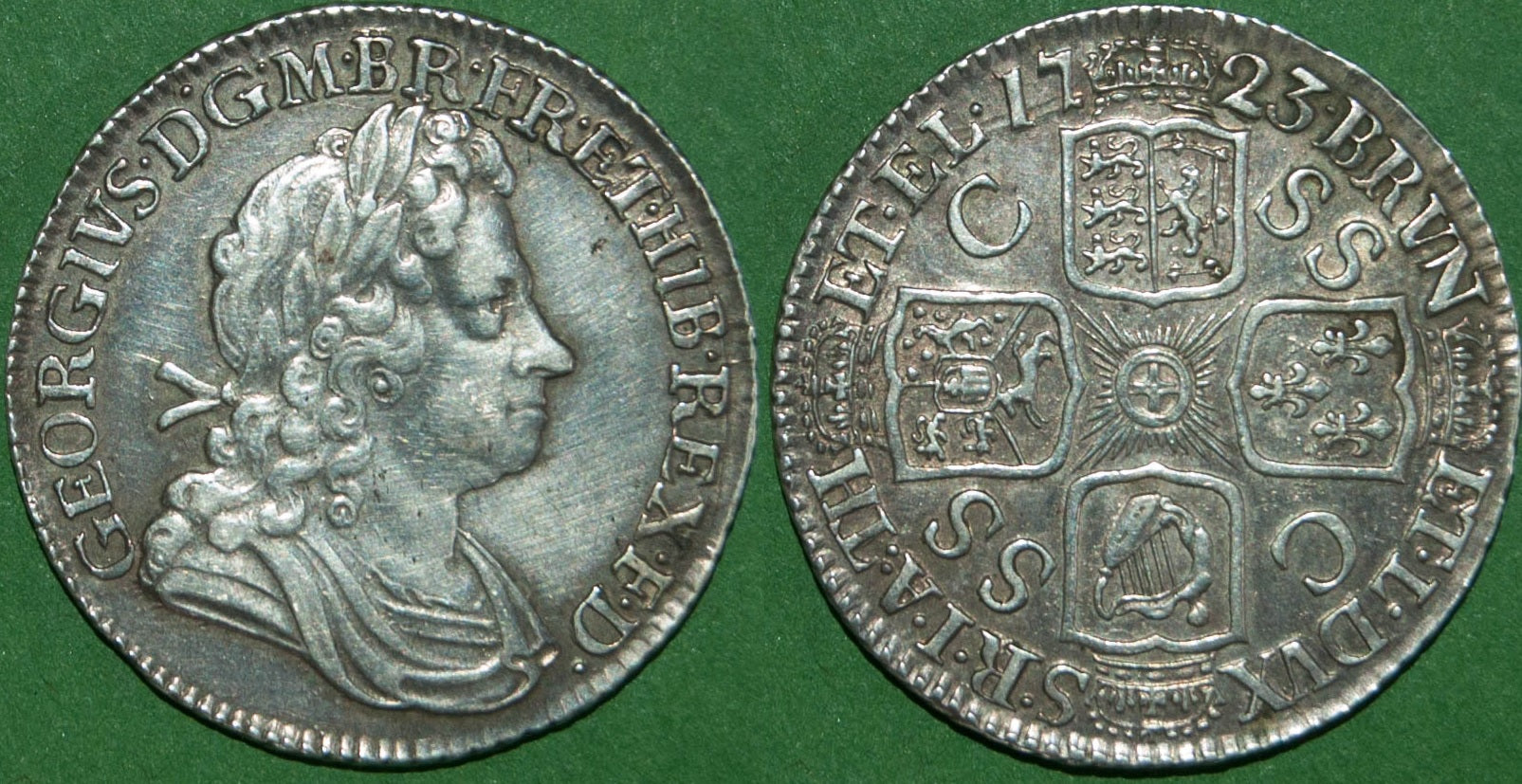
George I 1723 SSC Shilling, First Bust
Sold Out
S3647, ESC 1586 (1176). George I 1723 first bust SSC shilling. Good detail, but lightly cleaned. Grade: gVF

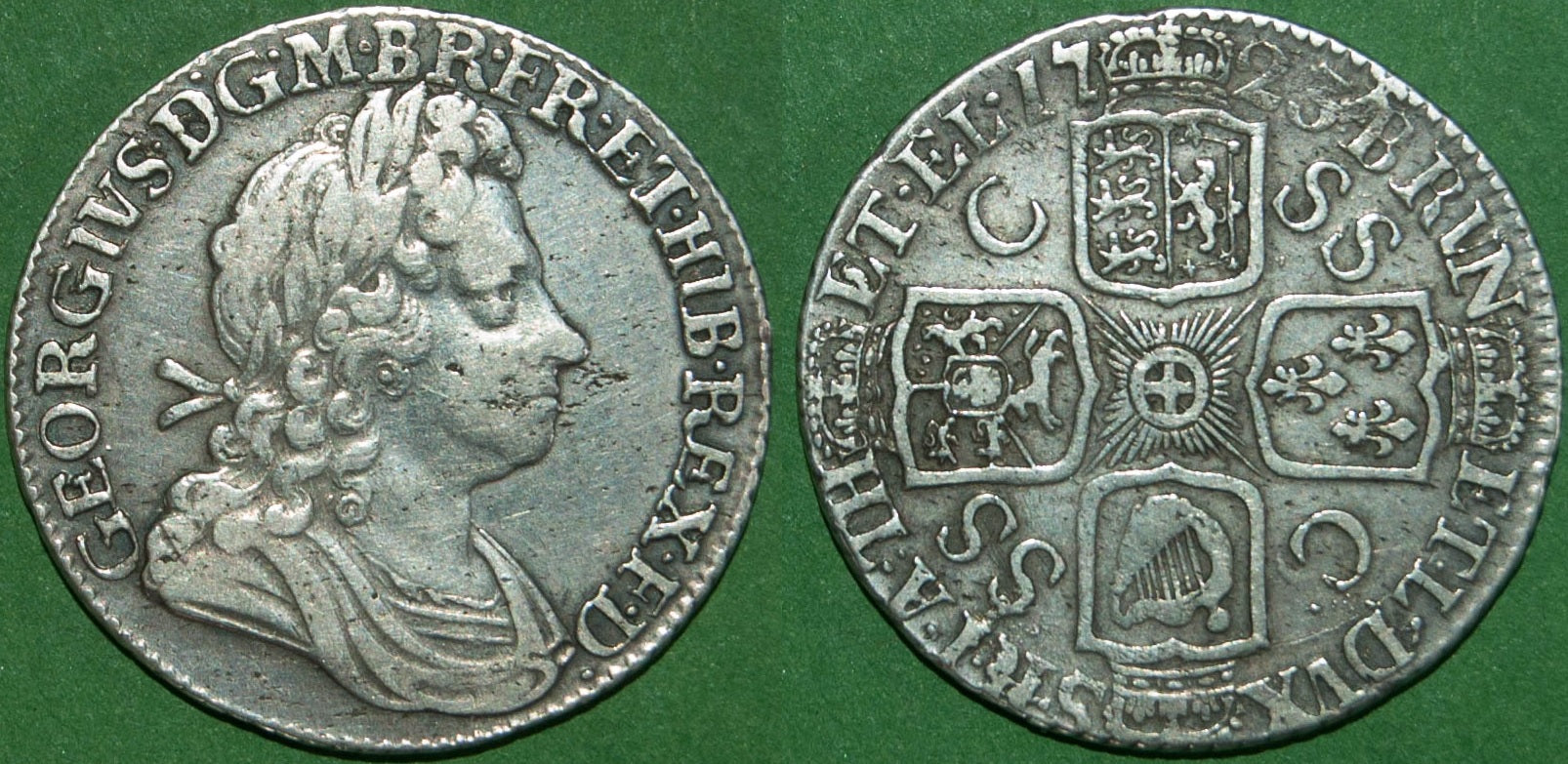
George I 1723 Shilling, C/SS in Third Quarter
Sold Out
S3647, ESC 1590 (1176A). George I 1723 first bust SSC shilling with C over SS in angle. Moderate wear and lightly cleaned. Grade: VF

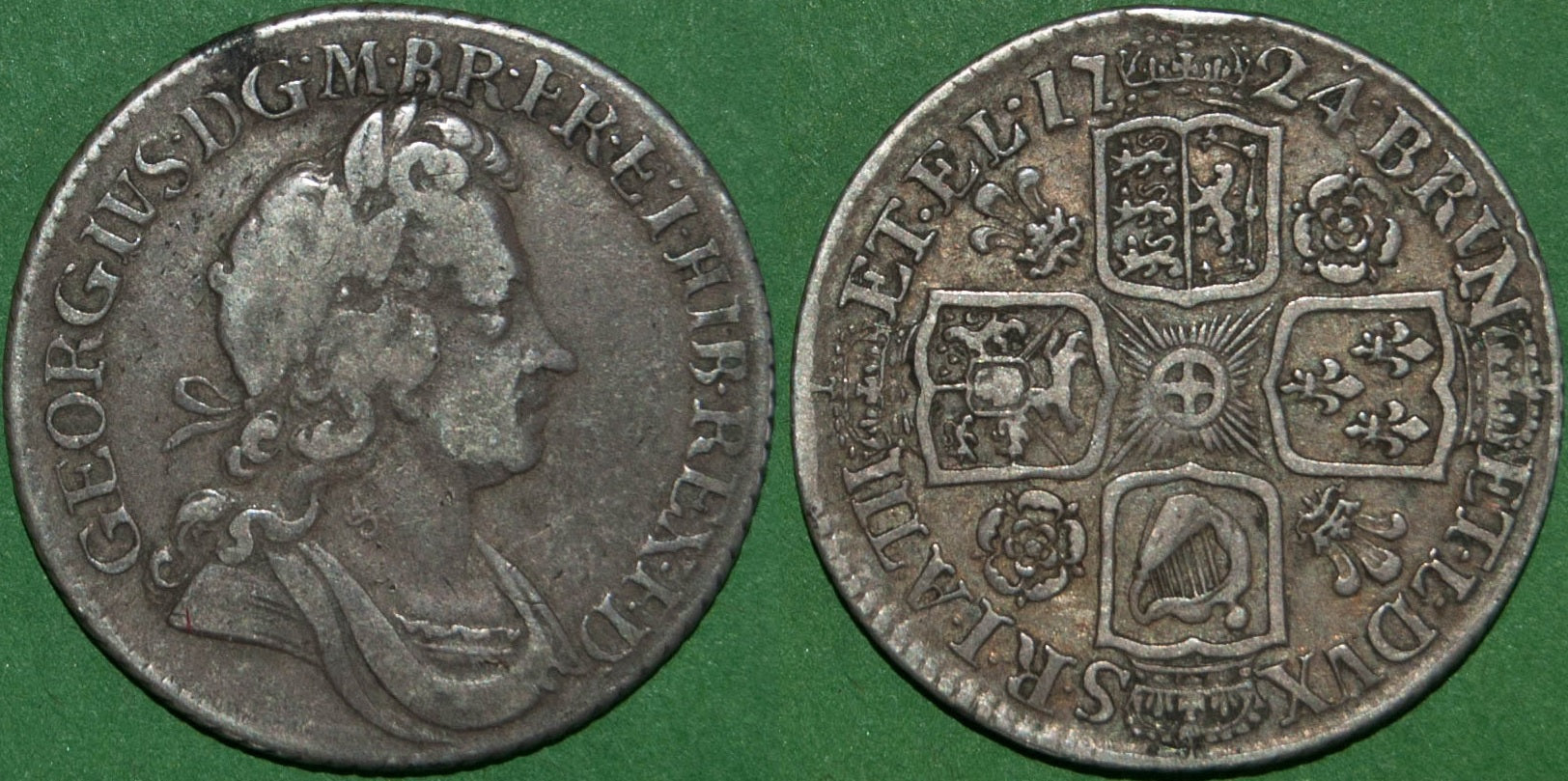
George I 1724 Roses & Plumes Shilling
Sold Out
S3649, ESC 1594 (1181). George I 1724 second bust shilling with roses and plumes in angles. Scarce. Toned with general wear. Grade: nVF

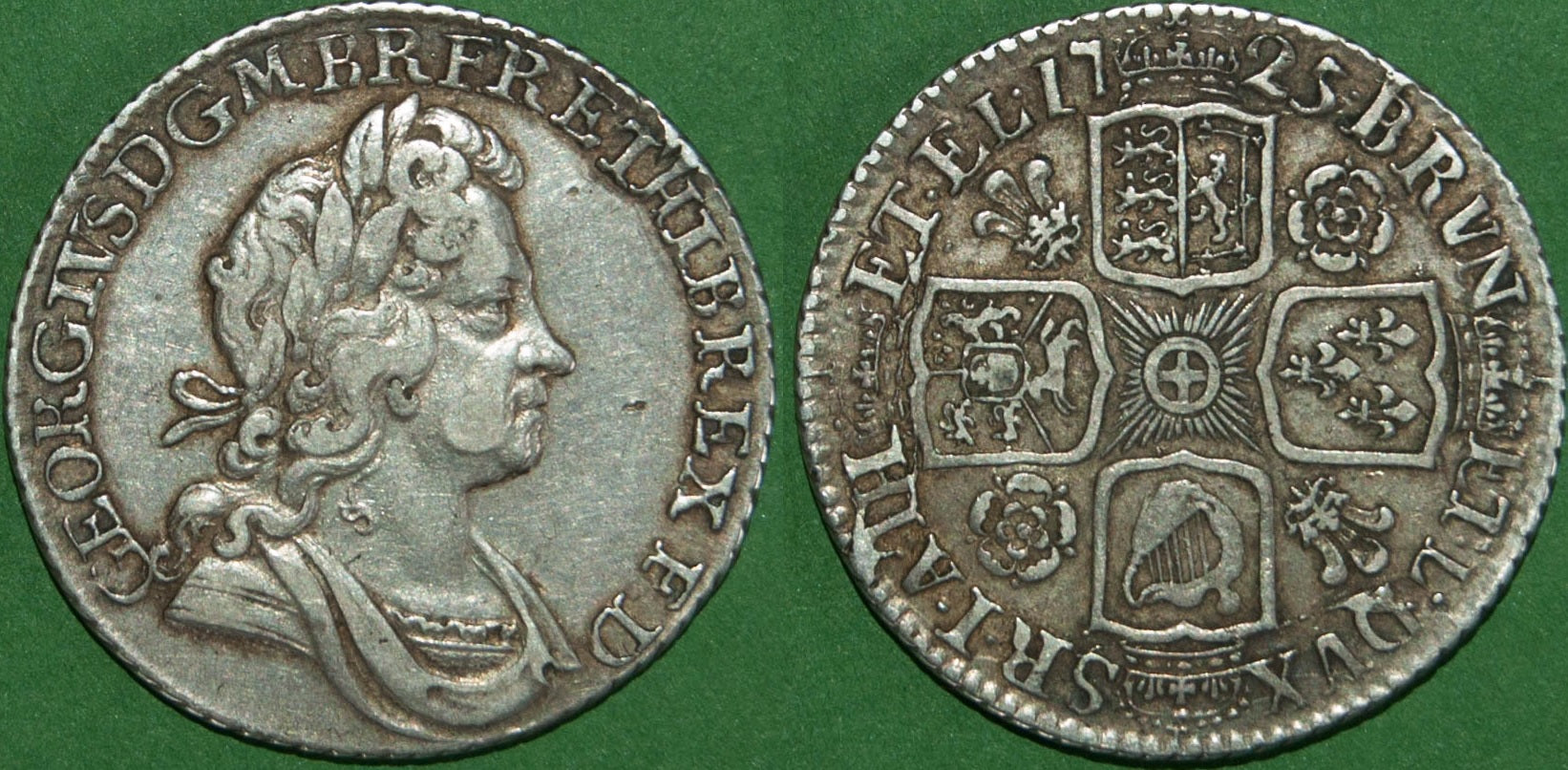
George I 1725 Roses & Plumes Shilling
Sold Out
S3649, ESC 1597 (1183). George I 1725 roses and plumes shilling. Scarce. The obverse stops are very weak and may be guide points for stops that weren't subsequently entered. It...

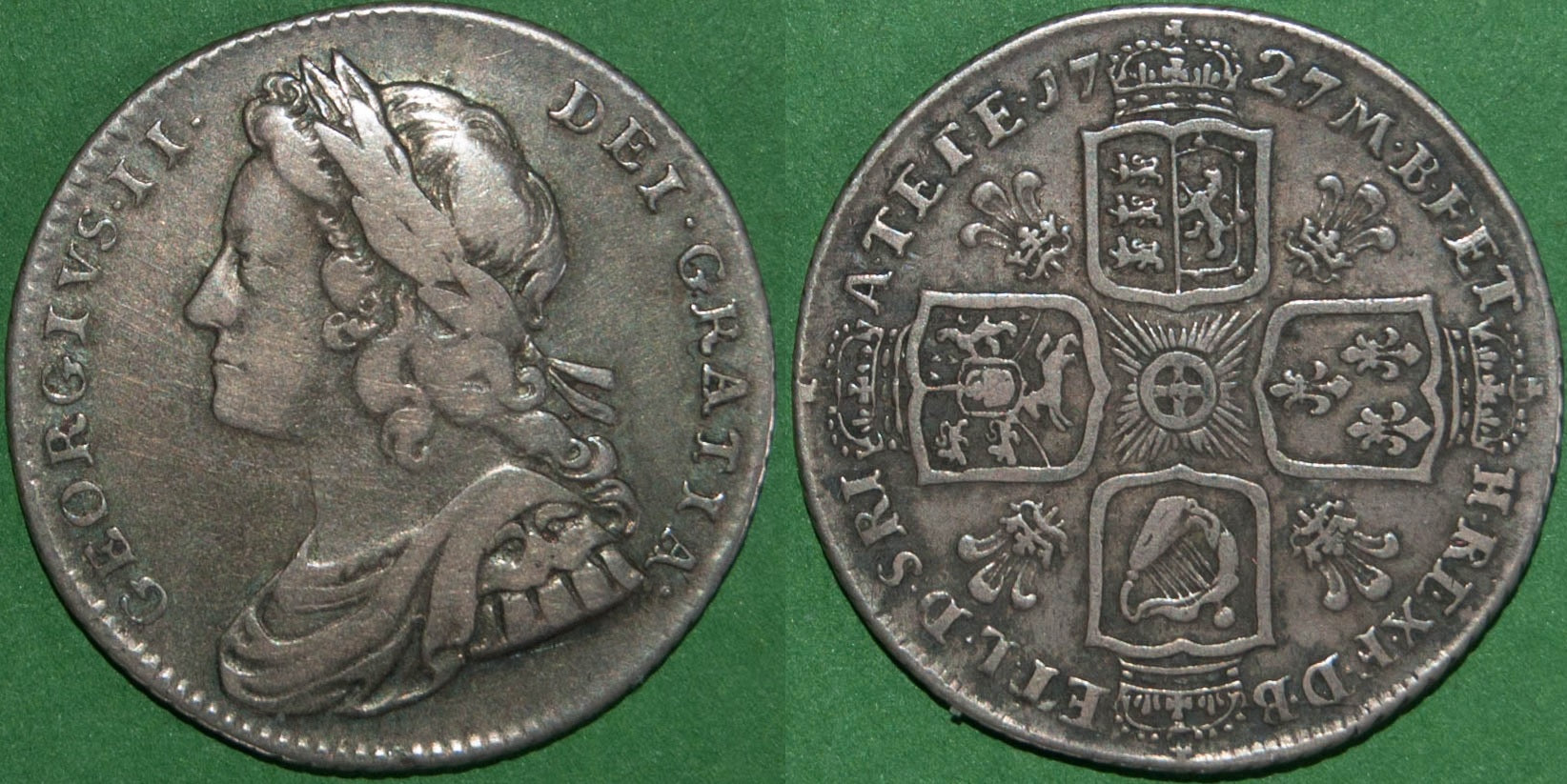
George II 1727 Plumes Shilling
Sold Out
S3697, ESC 1694 (1189). George I 1727 young head shilling with plumes in angles. This issue is rarer than ESC would suggest. Pleasantly toned with even wear. Grade: nVF

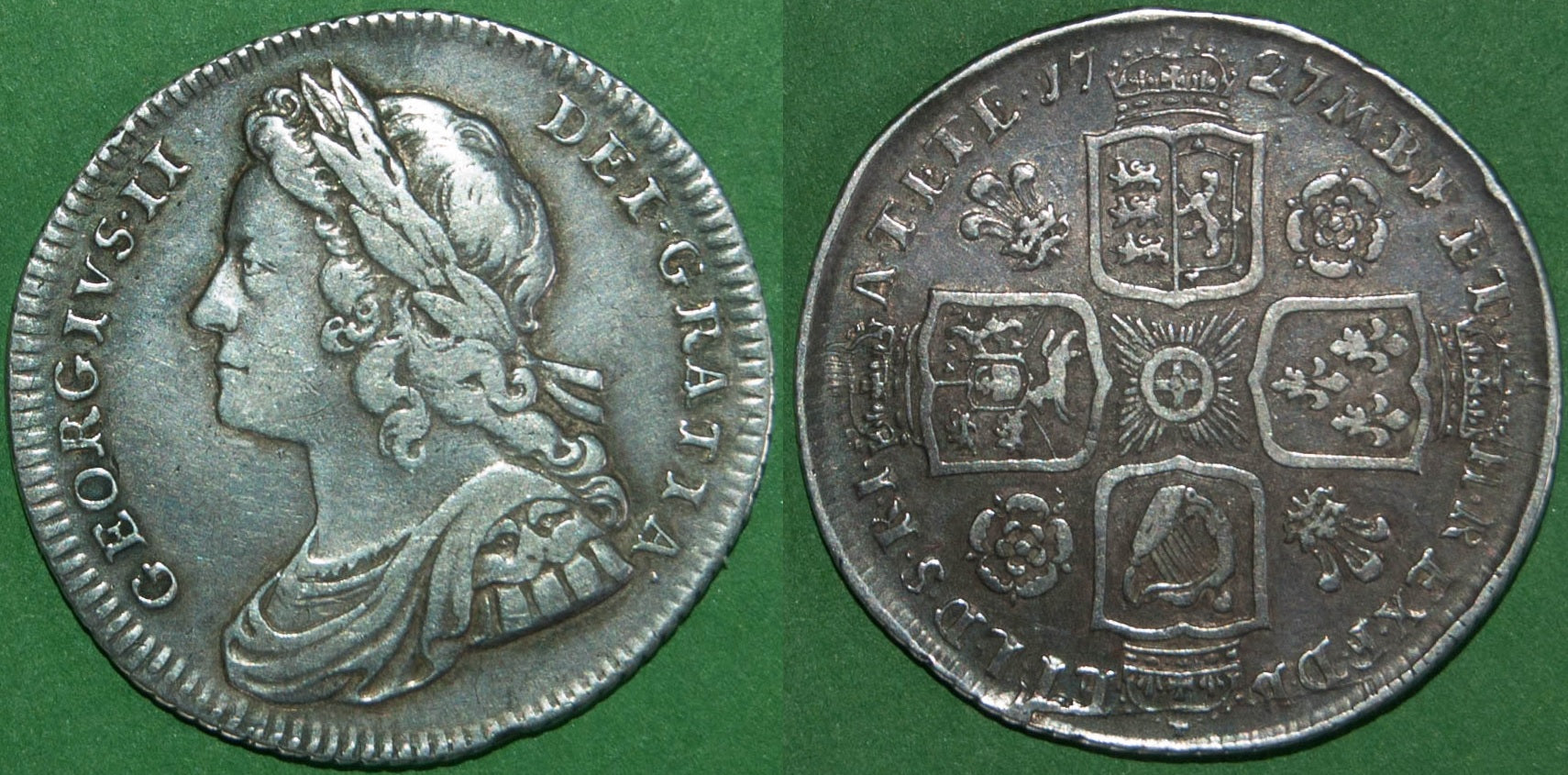
George II 1727 Roses & Plumes Shilling
Sold Out
S3698, ESC 1695 (1190). George II 1727 young head shilling with roses and plumes in angles. Toned with light wear. Grade: VF

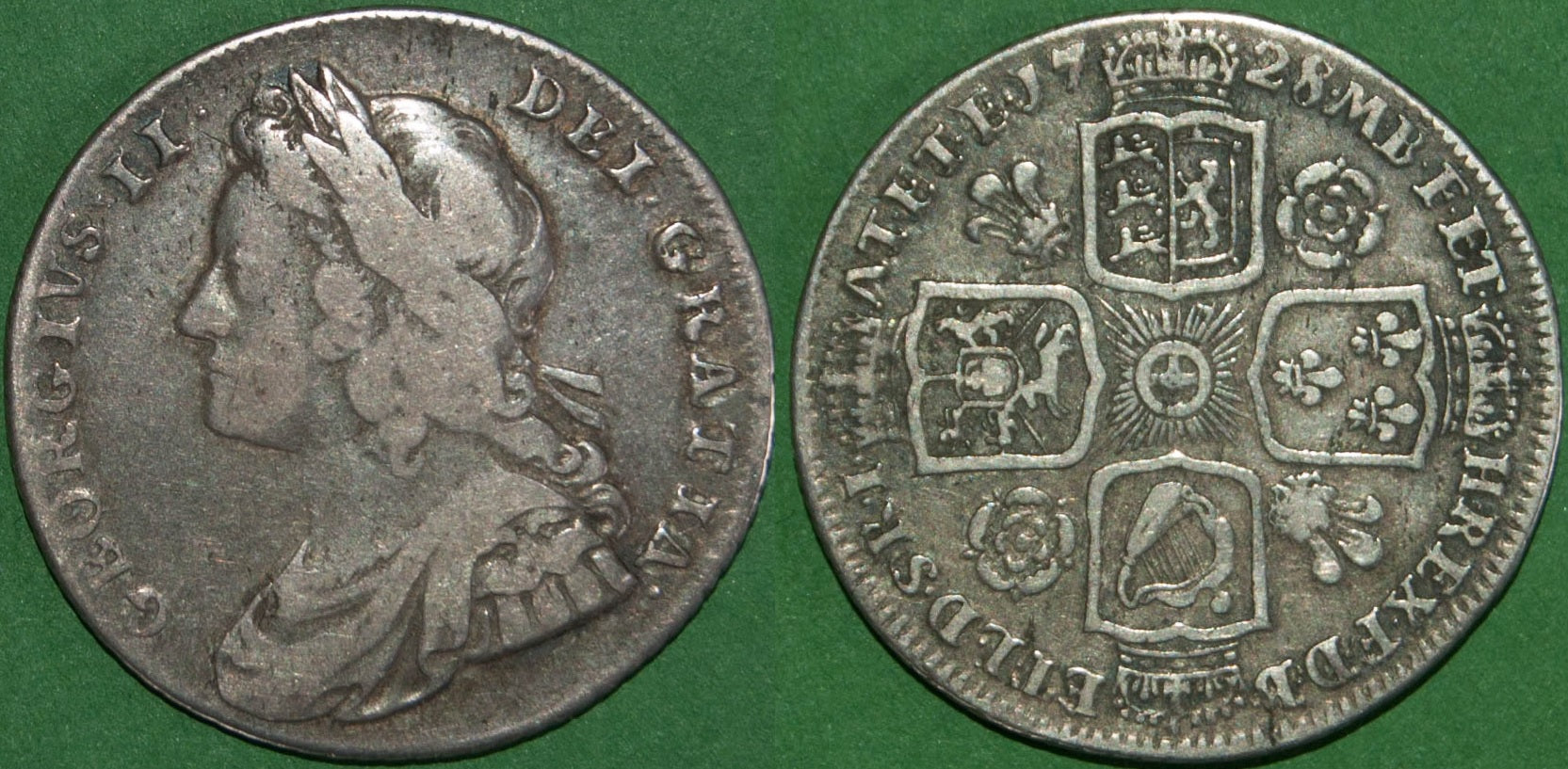
George II 1728 Roses & Plumes Shilling
Sold Out
S3698, ESC 1696 (1192). George II 1728 young head shilling with roses and plumes in angles. A scarcer date. The second A of GRATIA is unbarred. Toned with wear to...

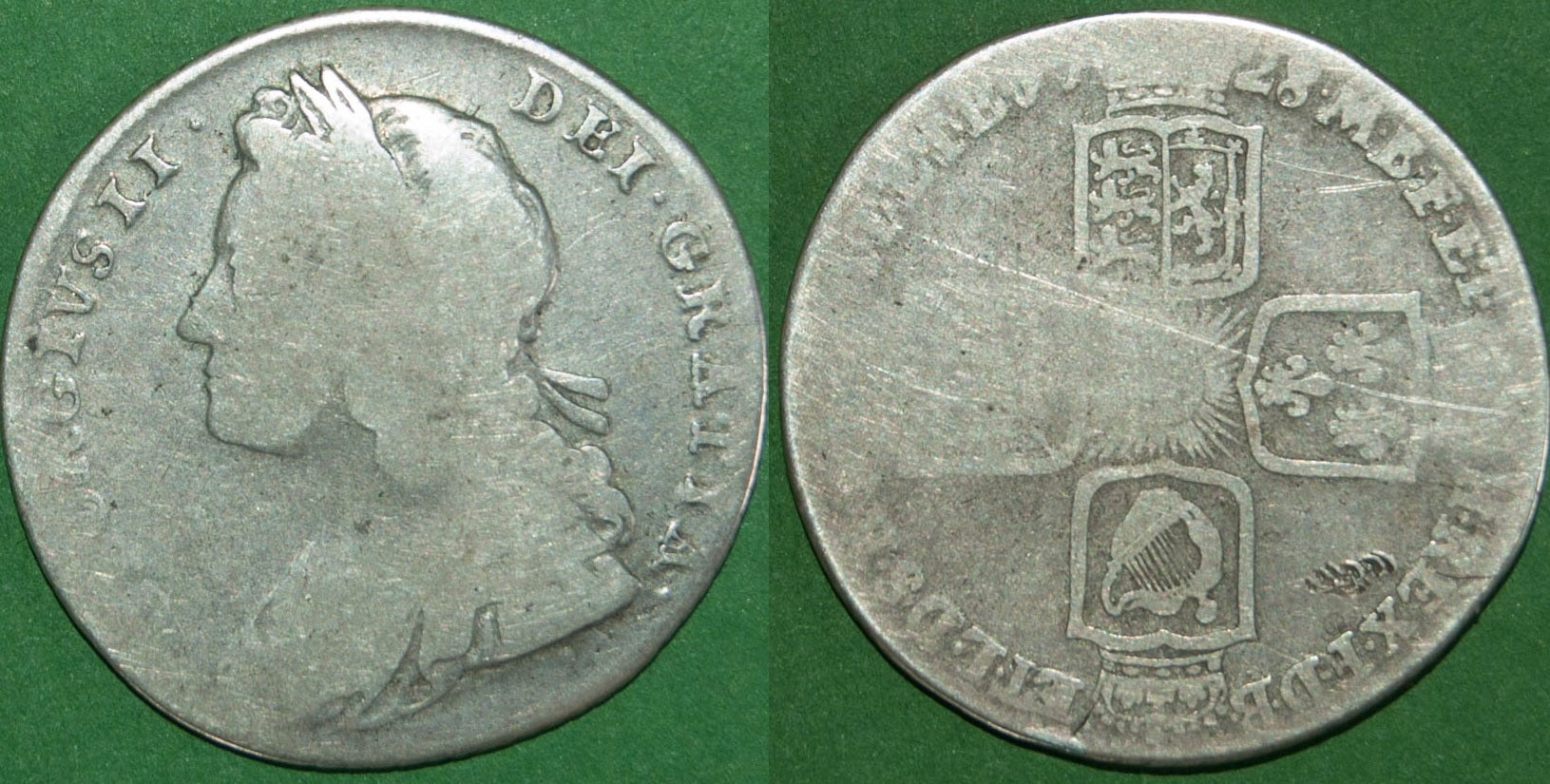
George II 1728 Shilling, Plain Angles
Sold Out
S3699, ESC 1698 (1199). George II 1728 young head shilling with plain angles. Not as rare as ESC would suggest. Much wear and mostly fair, but most detail remains. Grade:...

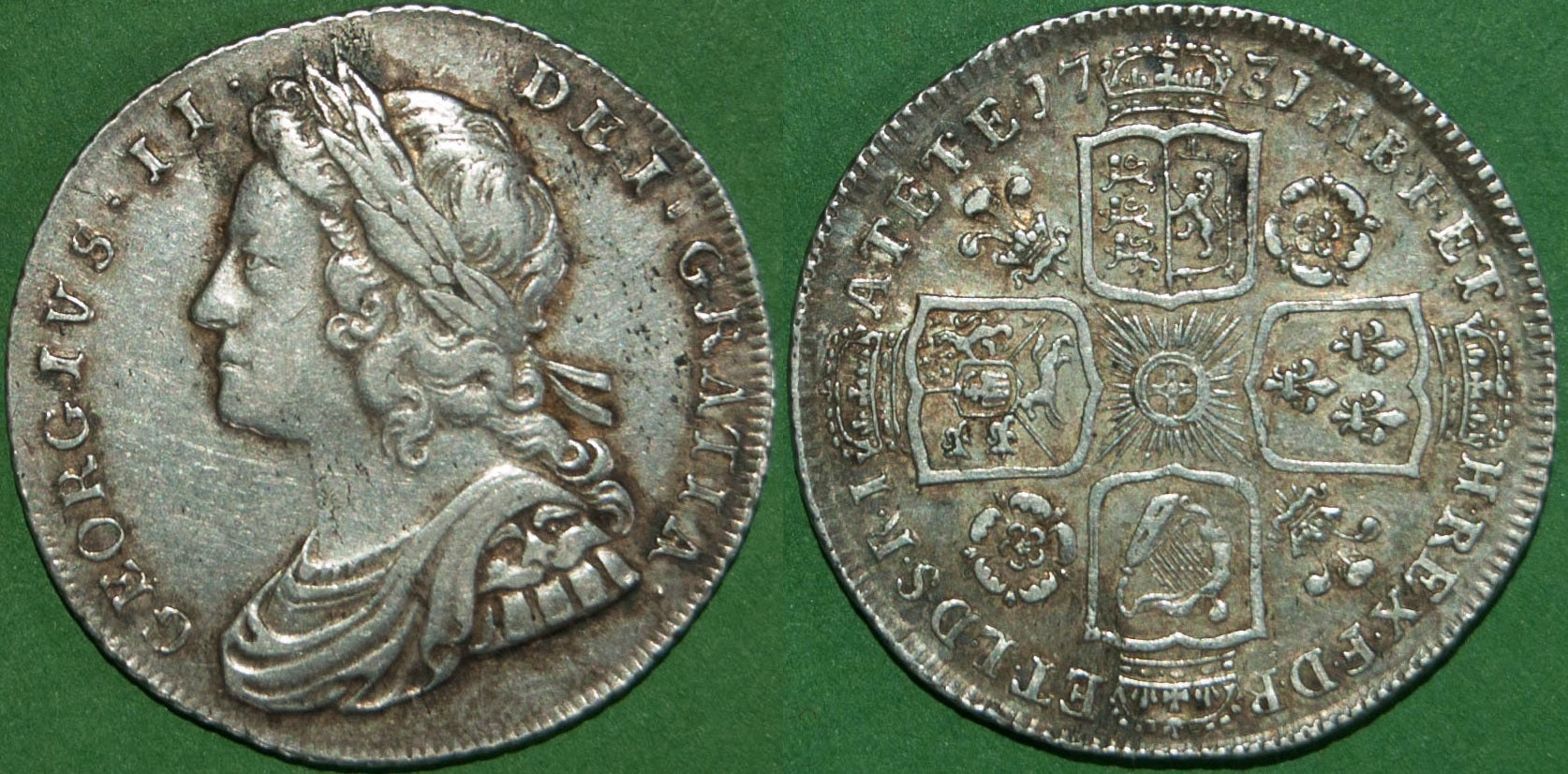
George II 1731 Roses & Plumes Shilling
Sold Out
S3698, ESC 1703 (1194). George II 1731 young head shilling with roses and plumes in angles. Light wear with a scratch to the cheek. Toned. Grade: better than VF

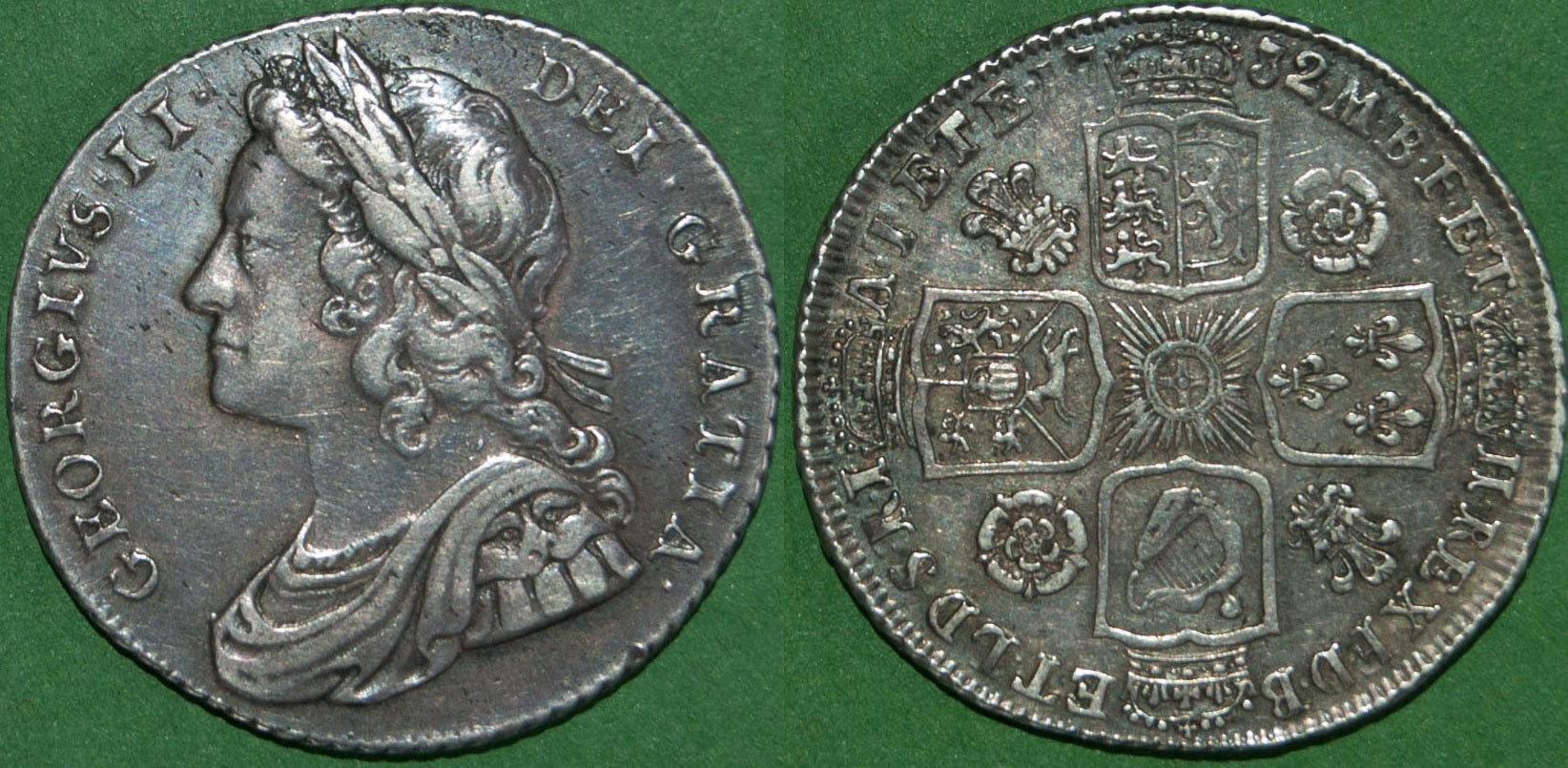
George II 1732 Roses & Plumes Shilling
Sold Out
S3698, ESC 1705 (1196). George II 1732 young head shilling with roses and plumes in angles. Rare. Toned with light wear and a thin hairline under the chin. Grade: gVF

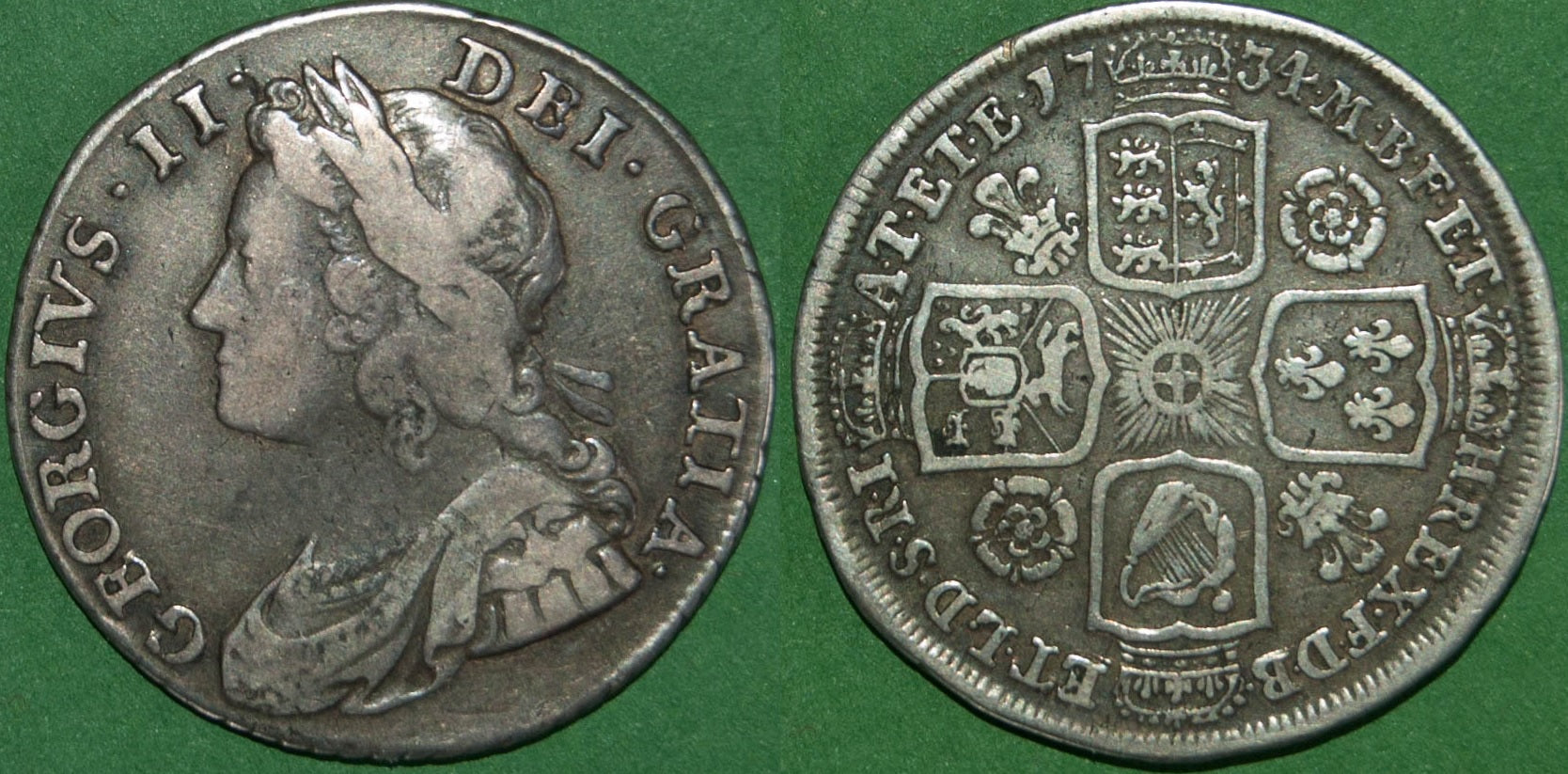
George II 1734 Roses & Plumes Shilling
Sold Out
S3700, ESC 1706 (1197). George II 1734 young head shilling with roses and plumes in angles. Toned with general wear, the reverse better Grade: gFine/nVF

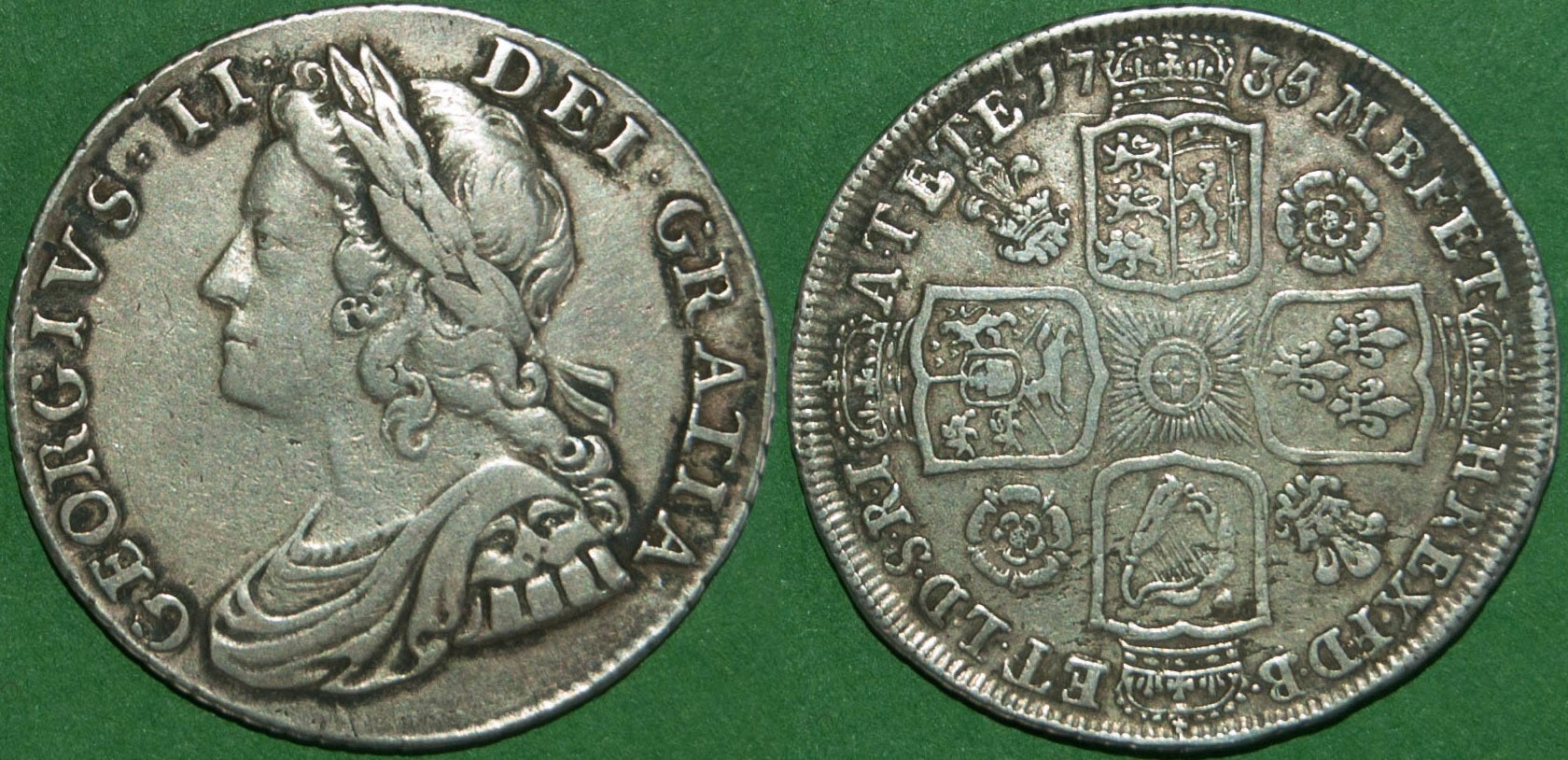
George II 1735 Roses & Plumes Shilling
Sold Out
S3700, ESC 1707 (1198). George II 1735 young head shilling with roses and plumes in angles. The 5 may be over a 4, but is not convincingly so, as the...

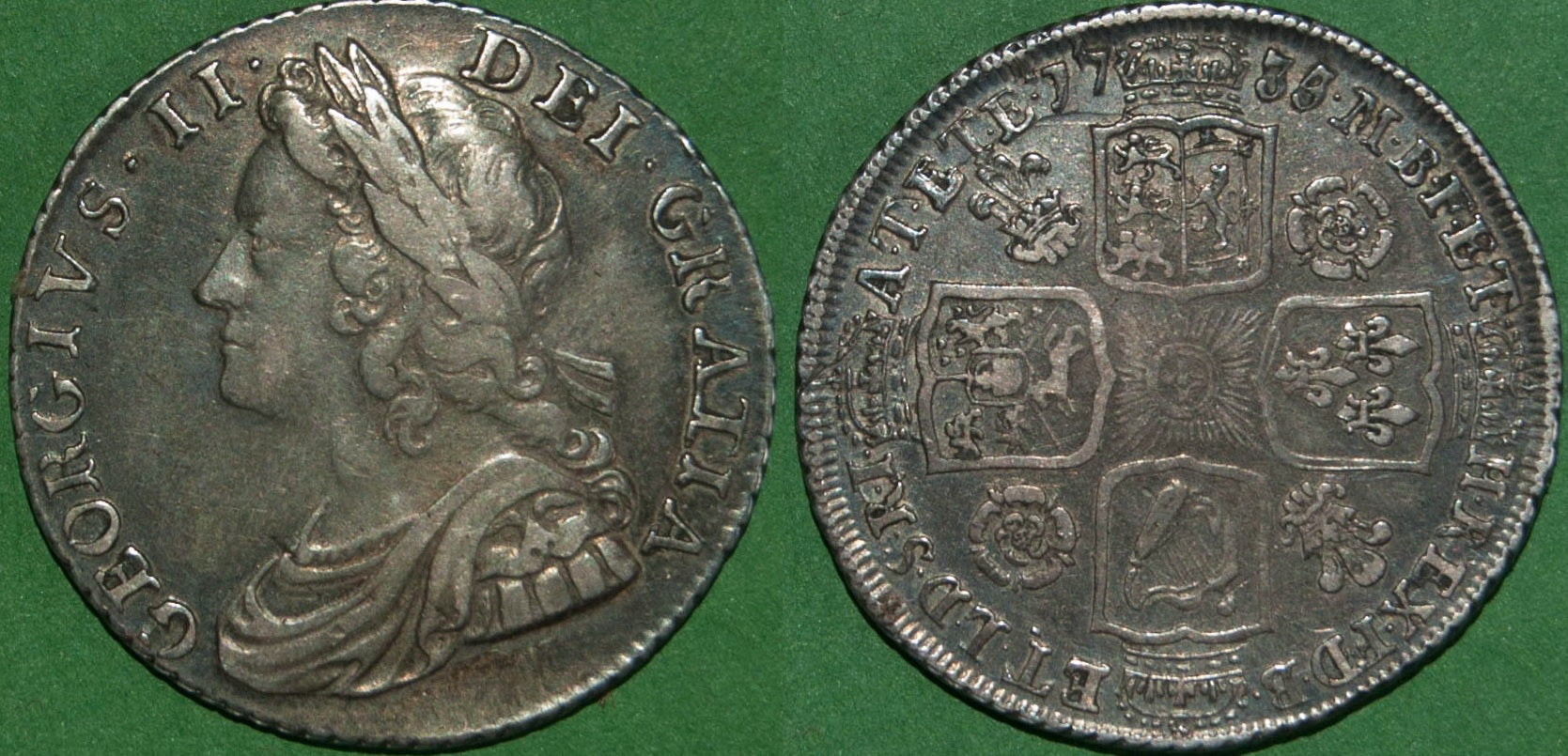
George II 1735 Roses & Plumes Shilling
Sold Out
S3700, ESC 1707 (1198). George II 1735 young head shilling with roses and plumes in angles. Struck from the same reverse die as the previous coin. Attractively toned, but slightly...

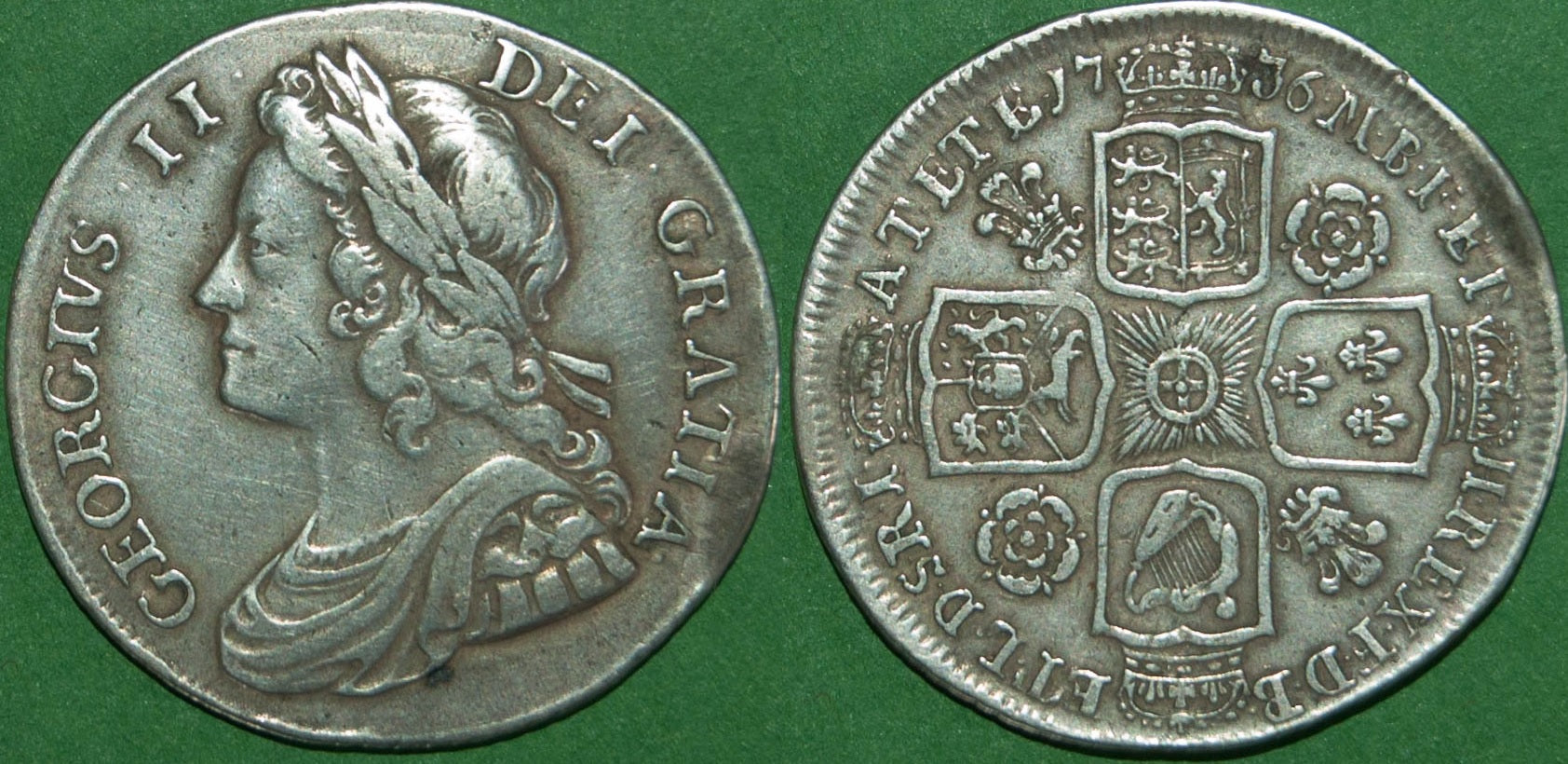
George II 1736 Roses & Plumes Shilling
Sold Out
S3700, ESC 1709 (1199). George II 1736 young head shilling with roses and plumes in angles. Toned with all detail clear. Grade: VF

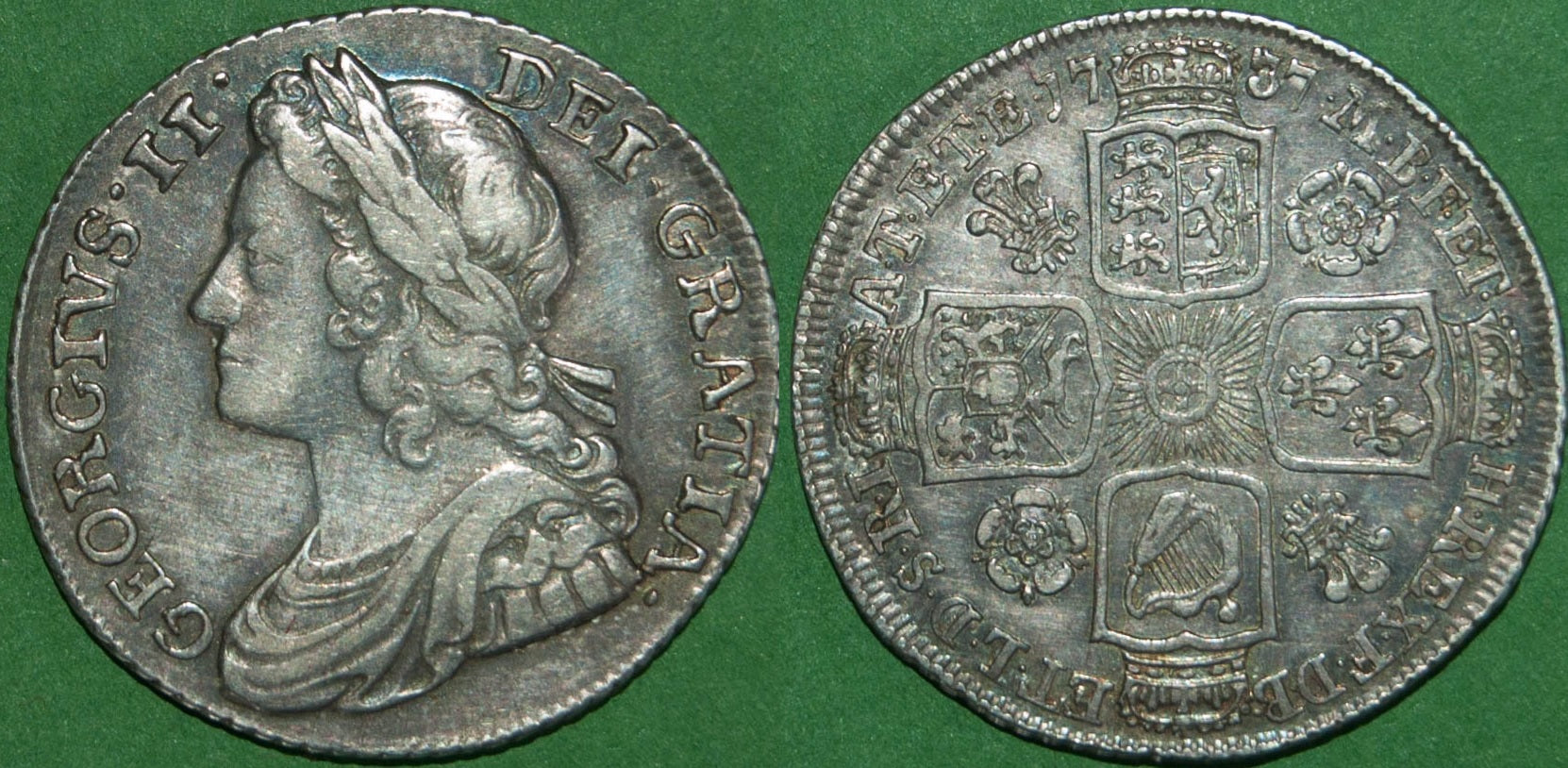
George II 1737 Roses & Plumes Shilling
Sold Out
S3700, ESC 1711 (1200). George II 1737 young head shilling with roses and plumes in angles. Attractively toned with light wear. Grade: VF

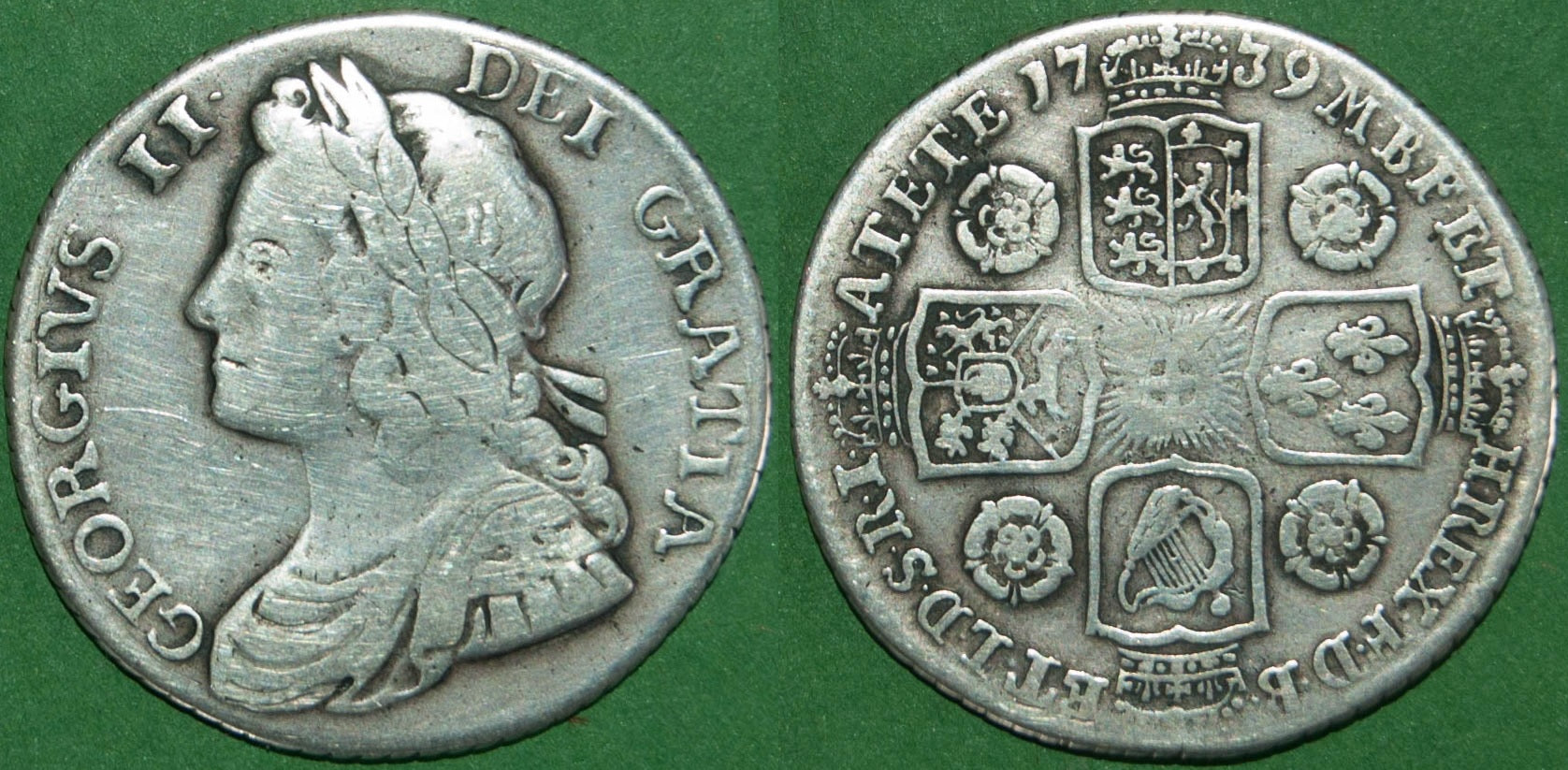
George II 1739 Shilling
Sold Out
S3701, ESC 1713 (1201). George II 1739 young head shilling with roses in angles. General wear, cleaned and polished. Grade: Fine

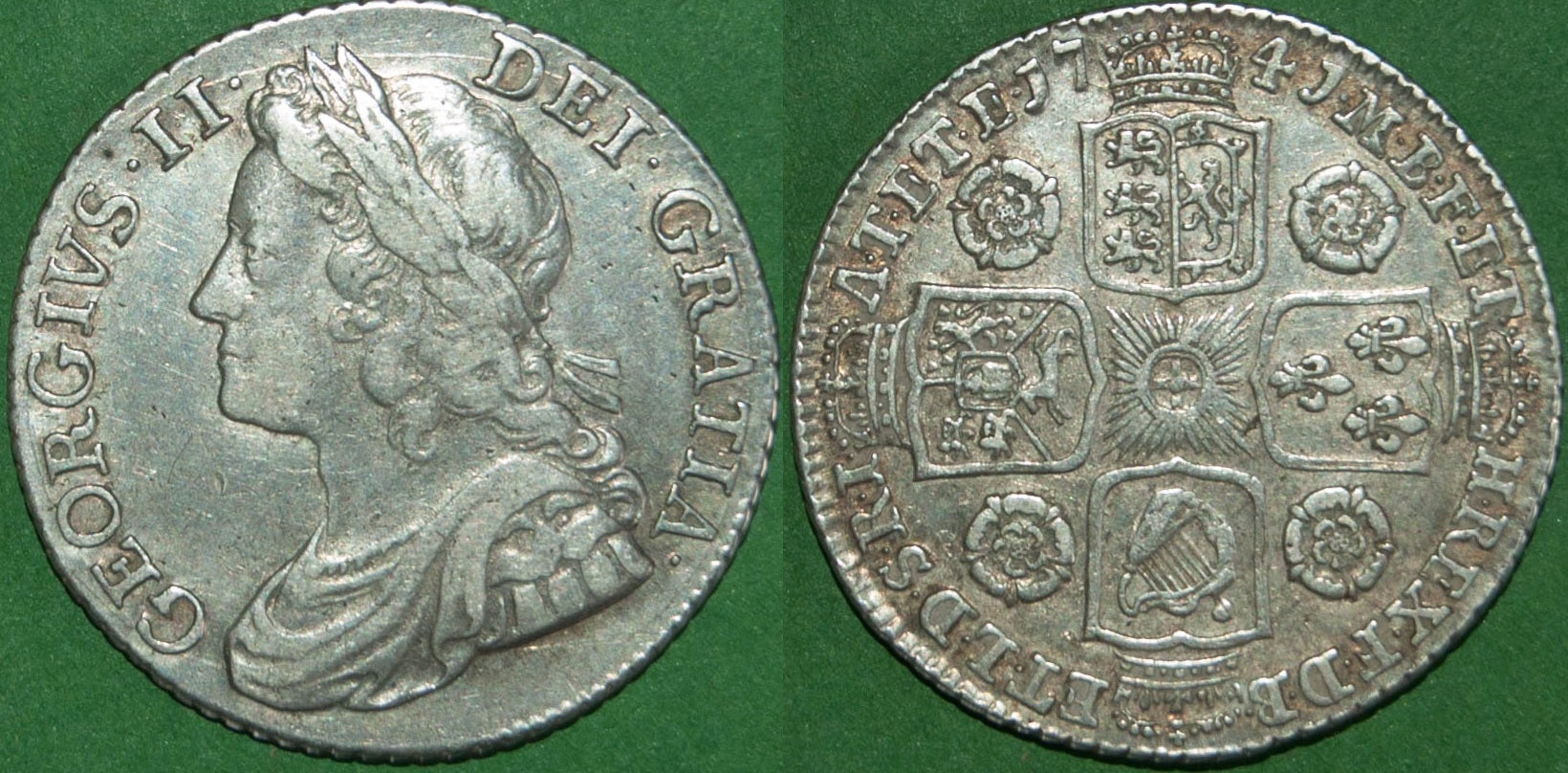
George II 1741 Shilling
Sold Out
S3701, ESC 1717 (1202). George II 1741 young head shilling with roses in angles. Lightly toned with some deposits within the reverse devices. Grade: VF
© 2026 RP Coins.